GC-MS Fatty Acid Profile and In silico Studies of Telfairia occidentalis Hook f. (Fluted Pumpkin) and Sphenostylis stenocarpa (African Yam bean) Seeds Oil on Human 5 Alpha Reductase II
DOI:
https://doi.org/10.54117/ijmds.v4i1.47Keywords:
Androgen, Urology, Phytotherapy, Benign prostate hyperplasia, Fatty acids, 5α-reductase IIAbstract
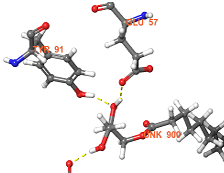
Increased testosterone levels in older men are linked to a higher risk of benign prostate hyperplasia (BPH). This risk comes from the conversion of testosterone to the stronger hormone dihydrotestosterone (DHT) by the 5-alpha reductase enzyme. Managing BPH focuses on blocking this enzyme. This study examines how fatty acids from Telfairia occidentalis (Fluted pumpkin) and Sphenostylis stenocarpa (African Yam bean) seed oil affect human 5α-reductase II, using computer modeling. Gas mass spectrophotometry identified the fatty acids in the extracted oils. Computer analyses (molecular docking and MM-GBSA) were performed using the Maestro interface. GC-MS found six compounds with the most notable peaks in African yam bean seeds, and nine in fluted pumpkin seeds. Molecular docking identified 9-Octadecenoic acid (Z)-, 2,3-dihydroxypropyl ester (from African yam bean seeds, 6.24 kcal/mol) and Cyclopentadecanone, 2-hydroxy- (from fluted pumpkin seeds, -6.40 kcal/mol) as the most promising inhibitors of human steroid 5α-reductase II. MM-GBSA validation showed values of -87.06 kcal/mol and -60.49 kcal/mol for these compounds, respectively. 9-Octadecenoic acid (Z)-, 2,3-dihydroxypropyl ester formed bonds with GLU57, GLU197, and TYR91 residues in the enzyme, while Cyclopentadecanone, 2-hydroxy- formed a bond with ARG114. In summary, 9-Octadecenoic acid (Z)-, 2,3-dihydroxypropyl ester may be a promising inhibitor of human 5α-reductase II for managing BPH. Further animal and laboratory studies are needed to confirm these results.
Downloads
Published
How to Cite
Issue
Section
License
Copyright (c) 2026 Etim Esin Etim, Lawrence U. S. Ezeanyika, Martin Msughter Ganyam

This work is licensed under a Creative Commons Attribution 4.0 International License.