Advancements in Coconut Dehusking Technologies: A Comprehensive Review of Mechanization Trends, Performance Metrics, and Sustainability
DOI:
https://doi.org/10.54117/ijet.v1i2.17Keywords:
Coconut, Coconut dehusking machine, Agricultural processing, Operational efficiency, Performance Metrics, Rural technology, Renewable energy integration, Ergonomic designAbstract
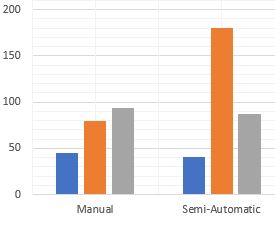
This review thoroughly investigates the evolution, performance, and design variants of coconut dehusking machines, which range from manual to automatic systems. Through a focused Boolean search on Scopus, 25 pertinent papers published between 1990 and 2024 were chosen using a structured literature review process. The selected studies were examined to assess cost, dehusking capacity, ergonomics, and operational efficiency. The results indicate a clear mechanization trend. Despite being less expensive, manual systems only produce 60 to 100 coconuts per hour and inflict a physical strain on operators. Semi-automatic machines with hydraulic systems and spiked rollers have intermediate capacity (120–240 coconuts/hour) and efficiency (85–90%), but they need to be manually loaded and maintained regularly. Due to their high cost, complexity, and restricted accessibility in remote regions, automatic systems that use lead screws, motorized clamps, and sensors have the best performance, reaching up to 271 coconuts/hour with 98–100% efficiency. Despite this, these systems are still underutilized. The review concludes that widespread adoption requires scalable and affordable solutions made for smallholder farmers. Locally sourced materials, modular design techniques, and the integration of renewable energy sources are among the recommendations. Particularly in low-resource agricultural areas, the study backs mechanization as a feasible means of enhancing coconut processing productivity, safety, and sustainability.