Comparative Assessment of Solar Photovoltaic and FACTS Deployment for Enhancing Available Transfer Capability in Nigeria 330 kV Transmission Grid
DOI:
https://doi.org/10.54117/ijet.v1i3.23.2025Keywords:
Available Transfer Capability (ATC), Solar Photovoltaic (PV), Flexible AC Transmission System (FACTS), Static Synchronous Compensator (STATCOM), Voltage Stability, Nigerian Transmission GridAbstract
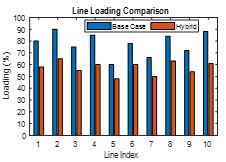
High electricity growth in Nigeria coupled with an obsolete transmission network has necessitated novel approaches to power grid optimization. This paper compares the two technologies- Solar Photovoltaic (PV) system and Flexible AC Transmission System (FACTS) devices, in particular Static Synchronous Compensator (STATCOM), individually embedded to the 330 kV Nigeria 48-bus transmission grid in a simulation-based study. With the assistance of Power System Analysis Toolbox (PSAT) in MATLAB, this paper summarizes how these are the technologies that developed to increase Available Transfer Capability(ATC), gain better voltage stability and change power flow under normal as well as under Single Line Contingency. Five weak buses were used for the simulation featuring poor voltage performance and three deployment confirmations were studied (FACTS, PV, and the the base case without any enhancement). The results prove that solar PV and FACTS devices can independently be used to enhance the performance. ATC enhancement of FACTS deployment are almost 35.7% in ATC whereas solar PV gave an ATC enhancement of 29.6%. Voltage variation was decreased by 24.6% and 29.4% in the FACTS-only and PV-only case respectively, over the base case. These findings imply that FACTS has more transfer capacity, while PV systems have more voltage support. The results of this study offer valuable knowledge for power system planners and decision makers in developing countries where additional infrastructure development may not be feasible or immediate, but a need to reinforce the transmission network using flexible and low-cost solutions exists.