Post-Occupancy Evaluation of Users’ Perception of Thermal Environment in an Office Building in a Tropical Climate
DOI:
https://doi.org/10.54117/2rb21822Keywords:
Buildings, occupants, post-occupancy evaluation, offices, productivityAbstract
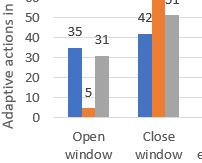
High or low indoor temperatures can negatively impact the health and productivity of office workers. This study adopted the Post Occupancy method to investigate users’ perception and adaptive actions in a naturally ventilated office building in the tropical climate. Approximately 244 responses were collected from 89 staff members from Alex Ekwueme Federal University, Ndufu-Alike, Ebonyi State. A questionnaire on users’ perception towards indoor environmental variables was administered during the rainy season, a period when users’ perception of the indoor environment is usually not thoroughly investigated. As the questionnaires were administered, the indoor and outdoor thermal variables were simultaneously measured with data loggers. Results indicate significant dissatisfaction with indoor temperatures (70% generally dissatisfied, 24% generally satisfied) when the mean indoor temperature recorded was low (27.8oC). Occupants preferred warmer environments, with majority of the staff (51%) choosing closing window as an adaptive action due to cold temperatures. The findings highlight the importance of knowing users' perception of the indoor environment and occupant behavior. Prioritizing occupants' thermal comfort in naturally ventilated office buildings, by incorporating adaptive design elements and providing occupants with control over their thermal environment, is recommended. By implementing these recommendations, building designers and operators can improve occupants' thermal comfort, productivity, and job satisfaction, ultimately contributing to a healthier and more productive work environment.
Downloads
Published
Issue
Section
License
Copyright (c) 2025 Cynthia C. Obi, Charles C. Munonye, Emmanuel Udomiaye, Anthony I. Maduabum

This work is licensed under a Creative Commons Attribution 4.0 International License.