Evaluation of Heavy Metals In Abandoned Mine Sites Of Jos-South, Plateau State, Nigeria
DOI:
https://doi.org/10.54117/72gmd845Keywords:
Heavy Metals, Pollution monitoring, Mine Sites, Metallic pollutants, Technological innovation, Cadmium, ChromiumAbstract
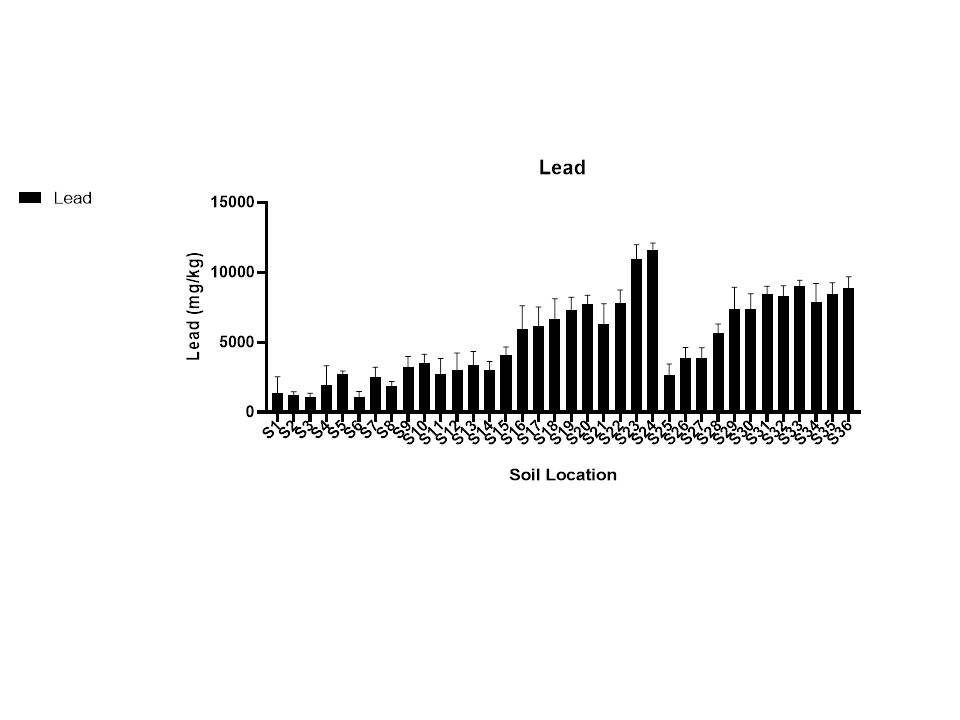
Soil forms an integral part of our agricultural resources and plays an important role in the production of foods and its security. Agricultural lands have become increasingly contaminated by organic, inorganic and metallic pollutants. Metals are introduced into the environment through weathering of rock, mining activities and waste from industries. Phytoremediation is the use of plant species mainly in the remediation of environmental contamination. It is an emerging technology that is non-invasive, cost-effective and it is environmentally friendly. The study aimed to evaluate heavy metals concetntrations in abandoned mine sites of Jos-South, Plateau State, Nigeria. Soil samples from among the native plant species surrounding the abandoned mine areas were collected and analyzed for total concentrations of lead, arsenic, cadmium, chromium and copper using an Atomic Absorption Spectrophotometer. The result indicated that the lead, arsenic, cadmium, chromium and copper contents in the soil samples were 1050-11570, 50-5160, 30-3165, 1120-46293.33 and 3506.67-38376.67mg/kg, with average contents of 5148.75, 2072.25, 1300.29, 16522.58 and 15114.12mg/kg respectively. The variation indexes of lead, arsenic, cadmium, chromium and copper were 58.49%, 65.25%, 68.44%, 57.84% and 54.99% respectively. Various other concentrations were also identified in the samples. Therefore, the study recommends the use of phytoremediation plants in areas of Jos- South Plateau, Nigeria to remove and stabilize heavy metals in the mining area.
Downloads
Published
Issue
Section
License
Copyright (c) 2025 Bilikisu Anike Oyewole, Jonathan Dabak, Titilayo O Johnson

This work is licensed under a Creative Commons Attribution 4.0 International License.