Assessment of the Effectiveness of Solid Waste Management Methods in Enugu Metropolis, Nigeria
DOI:
https://doi.org/10.54117/tyfhze87Keywords:
Solid Waste Management, Environmental Impact, Public Health; Disposal, Waste Collection, Awareness, ComplianceAbstract
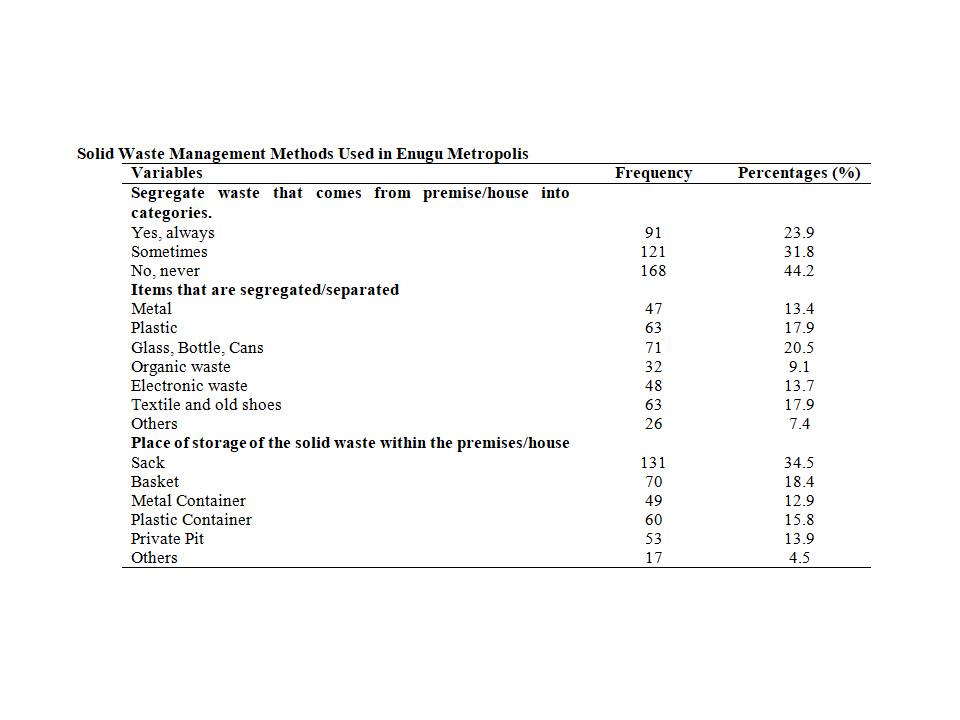
Solid waste management (SWM) is a growing concern in rapidly urbanizing Nigerian cities. In Enugu Metropolis, the persistence of open dumping, irregular collection, and low levels of awareness has led to increased environmental hazards and disease outbreaks. The aim of the study is to assess the effectiveness of SWM methods in Enugu metropolis. A descriptive cross-sectional study design was employed. Using multistage sampling, 384 residents from diverse locations such as markets, households, health centers, and universities were selected. Data were collected through interviewer-administered questionnaires and analyzed with SPSS version 23. Descriptive statistics (frequencies, percentages, and means) and inferential statistics (Chi-square tests) were used to interpret findings. The result of the study showed that most (55.5%) of the respondents were females and majority (25.0%) were within the age group of 26-35 and 41.3% had tertiary level of education, while majority were traders (31.3%). 44.2% of respondents never segregated their waste, while only 23.9% reported doing so consistently. Solid waste was mostly stored in sacks (34.5%) and collected primarily by government agencies (37.6%). Although 37.6% reported daily waste collection, 11.6% stated that waste was never collected in their area. Perceived problems included overflowing waste bins (16.1%) and air pollution from burning (11.1%). Environmental impacts were widely reported, with 77.4% observing pollution-related problems - especially land pollution (22.6%) and blocked drainage causing flooding (19.1%). Health problems linked to poor waste management were reported by 68.2% of respondents, with gastrointestinal diseases (23.0%), skin infections (21.3%), and malaria (20.5%) being most common. While only 45.5% of respondents were aware of proper waste management practices, awareness was significantly associated with higher levels of compliance (χ² = 176.644, p < 0.001). Solid waste management practices in Enugu Metropolis are still largely ineffective due to poor waste segregation, irregular collection, and low public awareness. Although some residents perceive current efforts as somewhat effective, widespread environmental and health risks remain.
Downloads
Published
Issue
Section
License
Copyright (c) 2026 Chidinma Cecilia Chilota, Emmanuel A. Nwobi, David Tyover Kajo, Blaise Ahanna Okorie, Ugochi Mgbechi Okorie, Jighjigh Friday Gudu

This work is licensed under a Creative Commons Attribution 4.0 International License.