Lactobacillus acidophilus-Fermented Banana Peel Supplement Maintains Organ Weight Homeostasis and Serum Biochemical Integrity in Albino Wistar Rats
DOI:
10.54117/ijbab.v2i2.157Published:
2026-04-28Issue:
Vol. 2 No. 2 (2026): VolumeKeywords:
Lactobacillus acidophilus, fermented banana peel, organ weight, liver function, kidney function, safety assessment, Wistar ratsArticles
Downloads
How to Cite
Abstract
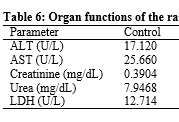
The global banana industry produces millions of tons of fruit annually for human consumption, generating an equivalent magnitude of banana peel waste that poses significant environmental disposal challenges. Yet, beneath this discarded by-product lies a rich reservoir of bioactive compounds, dietary fiber, and fermentable substrates that remain largely underutilized in functional food and nutraceutical applications. This study evaluates the effect of Lactobacillus-fermented banana peel on the organ weight and organ function of albino Wistar rats using in vivo techniques. Banana peel that was aseptically prepared and pulverized was fermented using a molecularly authenticated L. acidophilus strain (100% identity to DSM20079). This fermented product was fed to albino Wistar rats in a controlled trial to evaluate its effects on organ health, a critical preclinical safety parameter. Results demonstrated that the novel diet induced no statistically significant alterations in the absolute weights of vital organs, including the liver, kidneys, lungs, and heart (p > 0.05). Specifically, liver weights were identical at 6.31 ± 0.01 g, while kidney, lung, and heart weights showed negligible variations between control and test groups. Concurrently, comprehensive serum biochemical analysis revealed no significant differences in key markers of hepatic function (ALT, AST, LDH) or renal function (creatinine, urea) between the test and control groups (p > 0.05). The values for the test group were virtually identical to those of the control group: ALT (17.110 vs. 17.120 U/L), AST (25.280 vs. 25.660 U/L), creatinine (0.3903 vs. 0.3904 mg/dL), urea (7.9465 vs. 7.9468 mg/dL), and LDH (12.715 vs. 12.714 U/L). The data conclusively indicate that the fermented banana peel did not impose a toxicological burden or metabolic stress on the primary detoxification and excretory systems. This research successfully validates the physiological safety of Lactobacillus-fermented banana peel as a compatible functional ingredient. By demonstrating no adverse effects on organ integrity and function, the study provides essential preclinical evidence supporting the safe valorization of this agricultural by-product for potential applications in animal and human nutrition.