Awareness and Knowledge of Condom Use for STI Prevention among Undergraduate Students of Rivers State University
DOI:
https://doi.org/10.54117/hsri.v3i2.85Keywords:
Condom use, awareness, knowledge, undergraduate students, Rivers State University, Nigeria, STI preventionAbstract
Background: Sexually transmitted infections (STIs) continue to pose a major public health challenge among sexually active young adults, including university undergraduates in Nigeria. Despite widespread campaigns, inconsistent condom use remains a key driver of STI transmission. This study evaluated awareness and knowledge of condom use as a preventive measure against STIs among undergraduates at Rivers State University, Port Harcourt.
Methods: A descriptive cross-sectional survey was conducted among undergraduate students from five randomly selected departments across five faculties (total population = 5,062). The sample size of 395 was calculated using Yamane’s formula (margin of error = 0.05) and selected via multi-stage simple random sampling. Data were collected using a structured electronic questionnaire distributed through departmental online platforms. The instrument included demographic items and a section on condom awareness, scored on a 4-point Likert scale (Strongly Agree = 4 to Strongly Disagree = 1; criterion mean = 2.50). Validity was ensured through supervisor review, and reliability via test-retest correlation. Analysis involved descriptive statistics, frequencies, percentages, and mean scores.
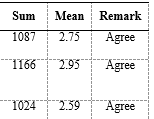
Results: Respondents were predominantly female (58.0%), aged 21–25 years (44.6%; approximate mean age 22.7 years), and in 300 (30.1%) or 400 level (29.9%). Overall awareness of condom use for STI prevention was high (grand mean = 2.68). Strong agreement was recorded for condoms being an effective method (mean = 2.75), their importance during sexual activity to prevent STI spread (mean = 2.95), adequate protection against STIs (mean = 2.59), and risk reduction through consistent use (mean = 2.76). Awareness of different condom types and brands and their equal effectiveness was notably low (mean = 2.34).
Conclusion: While undergraduate students at Rivers State University demonstrate good general awareness of condom efficacy in STI prevention, knowledge remains incomplete, particularly regarding condom varieties. These findings, consistent with earlier Port Harcourt studies, highlight the need for more comprehensive sexual health education addressing correct use, condom options, negotiation skills, and consistent practice to translate awareness into protective behaviors and reduce STI burden in this population.