Antidepressant and Gastro-Protective Effects of Zinc Gluconate on Chronic Restraint Stress-Induced Peptic Ulcer Model in Adult Male Wistar Rats
DOI:
10.54117/ijbcm.v2i2.15Published:
2025-06-29Issue:
Vol. 2 No. 2 (2025): Apr-JunKeywords:
Peptic ulcer, stress, antidepressant, Gastro-protection, Zinc gluconateArticles
Downloads
How to Cite
Abstract
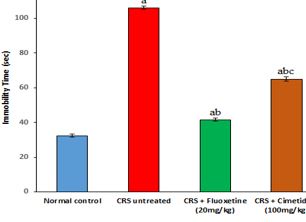
Peptic ulcers are open sores or lesions that spread throughout the muscularis mucosae of the gastrointestinal mucosa. There is a reciprocal association between depression and peptic ulcer disease, with depressed people having a higher chance of developing the condition. There are several negative side effects associated with current antidepressant and anti-ulcer treatments and because of their adverse effects, including tolerance development, relapse rates, and medication interactions, these medicines are restricted. Therefore, developing more potent options for treating peptic ulcers has become imperative. Hence, this study investigated the antidepressant and gastro-protective effect of Zinc gluconate on chronic restraint stress-induced peptic ulcer model in adult male Wistar rats. The study was carried out using thirty-five (35) adult male Wistar rats (150 - 200 g) and were assigned to seven groups (n=5) and treated daily for a period of twenty-one (21) days. The normal control group (group I) received 1mg/ml of distilled water for 21 days, while, peptic ulcer was induced in the rats in groups II-VII using chronic restraint stress (CRS). Group II were exposed to CRS only without any treatment. However, groups III, IV, V, VI, VII were co-administered orally with 20 mg/kg of fluoxetine, 100 mg/kg of Cimetidine, 50 mg/kg, 100 mg/kg, and 200 mg/kg of Zinc gluconate, respectively for 21 days. Twenty-four hours after treatment was completed, the animals were subjected to neurobehavioral assays [forced swim test (FST), and Y-maze test]. Immediately, the animals were sacrificed and stomach tissues were collected and prepared for peptic ulcer parameters examination. The results showed that 50 mg/kg, 100 mg/kg, and 200 mg/kg of Zinc gluconate significantly (p < 0.05) decreased immobility time and increase spontaneous alternation ratio in the FST and Y-maze test respectively when compared to the CRS untreated group. The result also showed that 50 mg/kg, 100 mg/kg, and 200mg/kg of Zinc gluconate significantly (p < 0.05) increased gastric pH and gastric wall mucus content, and significantly (p < 0.05) decreased gastric volume, total acidity, and pepsin concentration, reduced ulcer index, and inhibited ulceration by 59.46%, 75.67%, and 94.59% respectively. Therefore, it can be concluded that Zinc gluconate significantly showed antidepressant and gastro-protective effect via reduction in immobility time, improved percentage alternation and reduced ulcer index, gastric juice volume, total acidity, pepsin concentration and improved percentage inhibition, pH, gastric wall mucus in CRS-induced peptic ulcer in male Wistar rats.
Author Biographies
I. M. Isa, Department of Human Physiology, Faculty of Basic Medical Sciences, College of Medical Sciences, Ahmadu Bello University, Zaria, Nigeria
Y. Yusha’u, Department of Human Physiology, Faculty of Basic Medical Sciences, College of Medical Sciences, Ahmadu Bello University, Zaria, Nigeria.
M. B. Akor-Dewu, Department of Human Physiology, Faculty of Basic Medical Sciences, College of Medical Sciences, Ahmadu Bello University, Zaria, Nigeria.
License
Copyright (c) 2025 I. M. Isa, Y. Yusha’u, M. B. Akor-Dewu

This work is licensed under a Creative Commons Attribution 4.0 International License.