Hematological and Biochemical Alterations in Doxorubicin-Induced Toxicity and the Protective Role of Persea americana Seed Extract
DOI:
10.54117/ijbcm.v3i2.77Published:
2026-04-22Issue:
Vol. 3 No. 2 (2026): Apr-JunArticles
Downloads
How to Cite
Abstract
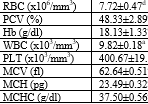
Doxorubicin (DOX) is a common chemotherapy drug, which causes dose-dependent toxicity affecting multiple systems like heart, blood, liver, and kidneys. This study assessed the hematological and biochemical changes caused by DOX and explored the protective effects of Persea americana seed extract in an experimental animal model. Forty-two Wistar rats were divided into six groups: G1, control rats; G2, received 5mg/kg of DOX alone; G3, received 100mg/kg reference drug, vitamin C; G4, received 5mg/kg DOX + 500mg/kg extract; G5 received 5mg/kg DOX + 1000mg/kg extract; G6 received 5mg/kg DOX + 1500mg/kg extract. Dox (5 mg/kg) was given intraperitoneally, and treatments lasted four weeks. Blood parameters (RBC, Hb, PCV, WBC, platelets), liver function markers (ALT, AST, ALP, total protein, albumin, bilirubin), and kidney function markers (urea, creatinine, electrolytes) were evaluated using standard methods. DOX treatment led to significant reductions (p < 0.05) in RBC, Hb, PCV, and platelets, along with an increase in WBC levels. It also raised liver enzymes and bilirubin while lowering total protein and albumin, indicating liver damage. Kidney impairment was shown by higher levels of urea and creatinine, as well as an electrolyte imbalance. Treatment with Persea americana seed extract significantly reduced these changes in a dose-dependent manner. The highest dose (1500 mg/kg) provided the most consistent improvement, similar to vitamin C. These results suggest that Persea americana seed extract may protect against DOX-related toxicity, likely through antioxidant effects. However, not all parameters completely normalized, showing partial recovery instead of full restoration. This study highlights the potential of Persea americana as a natural aid in reducing chemotherapy-induced toxicity and encourages more research into its therapeutic uses.
Author Biographies
Sebastine O. Nwoko, Department of Human Biochemistry, Faculty of Basic Medical Sciences, Nnamdi Azikiwe University, Nnewi, Anambra State, Nigeria.
Celestine N. Ekweogu, Department of Medical Biochemistry, Faculty of Basic Medical Sciences, Imo State University, Owerri, Imo State, Nigeria.
Promise N. Nwamkpa, Department of Medical Biochemistry, Faculty of Basic Medical Sciences, Imo State University, Owerri, Imo State, Nigeria.
Gabriel O. Oze, Department of Medical Biochemistry, Faculty of Basic Medical Sciences, Imo State University, Owerri, Imo State, Nigeria.
License
Copyright (c) 2026 Sebastine O. Nwoko, Celestine N. Ekweogu, Promise N. Nwamkpa, Gabriel O. Oze

This work is licensed under a Creative Commons Attribution 4.0 International License.