Consequences of Abortion among Women of Childbearing Age in Ogba/Egbeme Ndoni Local Government Area, Rivers State
DOI:
10.54117/ijbcm.v2i1.8Published:
2025-03-21Issue:
Vol. 2 No. 1 (2025): Jan-MarKeywords:
Abortion, Women of Childbearing Age, Consequences of AbortionArticles
Downloads
How to Cite
Abstract
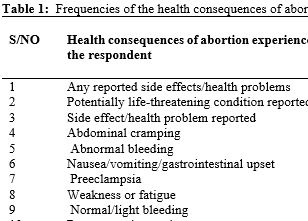
Abortion has been a great challenge in developing countries like Nigeria due to restrictive abortion laws. Quackery practices have increased mortality and thus made abortion unsafe and life-threatening. Currently, about 75% of global maternal deaths are due to unsafe abortion. The incidence of abortion in Nigeria is likened to a lack of adequate health care resources and infrastructure, restrictive abortion laws and religious beliefs. This review explored a few pieces of research revealing population perspectives and social justice relating to unsafe abortion in Nigeria. Based on their outcomes, challenges, and recommendations, unsafe abortion risks are perceived as preventable and controllable and can be achieved through community and behavioural changes which could involve adaptation to both global responses to international programs and policies. To achieve this, culture and religion will also play an influential role as Nigeria is multicultural and has different religions.
Author Biography
Udo Orukwowu, Department of Nursing Sciences, Faculty of Basic Medical Sciences, College of Medical Sciences, Rivers State University
License
Copyright (c) 2025 Udo Orukwowu

This work is licensed under a Creative Commons Attribution 4.0 International License.