Factors Influencing the Application of Ethical Principles in Clinical Practice among Student Nurses: Implications for Nursing Education and Practice
DOI:
10.54117/jnmahs.v4i2.75Published:
2026-04-05Issue:
Vol. 4 No. 2 (2026): VolumeKeywords:
Nursing ethics, ethical principles, student nurses, clinical practice, moral distress, nursing education, Nigeria, barriers to ethical applicationArticles
Downloads
How to Cite
Abstract
Background: Ethical principles form the foundation of professional nursing practice, yet student nurses often encounter significant barriers in applying them consistently during clinical placements. Understanding these factors is essential for improving nursing education and reducing moral distress among future nurses.
Aim: This study examined the perceived factors influencing the application of ethical principles in clinical practice among undergraduate nursing students.
Methods: A descriptive cross-sectional design was employed. Using convenience sampling, 202 electronic questionnaires were distributed to Years 2–4 nursing students at Rivers State University, Nigeria; 191 valid responses were obtained (95.6% response rate). Data were collected via a researcher-developed, structured questionnaire with established face/content validity and acceptable reliability (Cronbach’s α = 0.68). Analysis utilized descriptive statistics in SPSS version 27, including frequencies, percentages, means, and standard deviations.
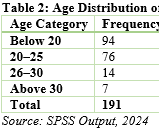
Results: Respondents were predominantly female (67.5%) and aged below 20 years (49.2%). The grand mean score for perceived inhibiting factors was 3.29 (SD = 0.79) on a 4-point Likert scale, indicating strong agreement. Top barriers included poor/lack of knowledge of ethical principles (M = 3.43), inadequate supervision leading to non-accountability and negligence (M = 3.39), influence of institutional policies/procedures (M = 3.38), time constraints, organizational barriers, stress overload, lack of advocacy support, and poor communication among nurses.
Conclusion: Significant individual, educational, organizational, and systemic barriers hinder ethical principle application among student nurses. These findings highlight the urgent need for enhanced ethics education, improved clinical supervision, supportive institutional policies, and resource allocation in nursing curricula and practice settings to foster ethical competence, mitigate moral distress, and promote high-quality, principled patient care in Nigeria and similar contexts.
Author Biographies
Aleruchi Lenchi Oji, Department of Nursing Sciences, Faculty of Basic Medical Sciences, College of Medical Sciences, Rivers State University.
Udo Orukwowu, Department of Nursing Sciences, Faculty of Basic Medical Sciences, College of Medical Sciences, Rivers State University.
Rose Olunwa Obele, Department of Nursing Sciences, Faculty of Basic Medical Sciences, College of Medical Sciences, Rivers State University.
Augusta Eleazar Agharandu, Department of Nursing Sciences, Faculty of Basic Medical Sciences, College of Medical Sciences, Rivers State University.
Bipbari Precious Makoro, Department of Nursing Sciences, Faculty of Basic Medical Sciences, College of Medical Sciences, Rivers State University.
License
Copyright (c) 2026 Aleruchi Lenchi Oji, Udo Orukwowu, Rose Olunwa Obele, Augusta Eleazar Agharandu, Bipbari Precious Makoro

This work is licensed under a Creative Commons Attribution 4.0 International License.