A Survey of the Availability and Suitability of Mobile Applications for Digital-Skills Learning Among Older Adults in Nigeria
DOI:
https://doi.org/10.54117/ijps.v3i1.21Keywords:
Mobile Learning, Older Adults, Usability, Accessibility, Nigeria, Digital SkillsAbstract
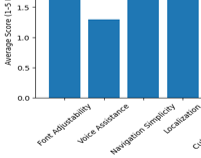
Digital skills have become essential for social participation, access to communication services, financial transactions, healthcare management, government services, and broader economic inclusion. Mobile applications present a promising platform for flexible and self-paced digital-skills acquisition; however, most commercially available applications were not developed with ageing learners in mind. This study surveyed the availability and suitability of mobile applications that support digital-skills learning and assessed their responsiveness to age-friendly design principles. A needs-assessment survey was adopted to determine whether existing applications adequately accommodate the sensory and usability needs of older adults, involving structured analysis of ten (10) mobile applications and supplementary interaction feedback from twenty (20) older adults aged 58–79 years. Quantitative findings demonstrate high availability of general-purpose digital-literacy applications but limited evidence of intentional age-friendly design, with most lacking font adjustability, voice assistance, simplified navigation, or cultural and linguistic localization. Qualitative feedback further revealed visual strain, menu anxiety, and uncertainty about interaction steps as barriers to adoption. Only 22.5% of older adults expressed willingness to use the evaluated apps. The study concludes that current applications insufficiently support ageing users and recommends inclusive development guidelines as in interface design, localization strategies, and policy actions to reduce Nigeria’s senior digital-inclusion gap.
Downloads
Published
How to Cite
Issue
Section
License
Copyright (c) 2026 Ogochukwu C. Okeke, Ike J. Mgbeafulike, Chioma P. Uba, I. C. Ugbor

This work is licensed under a Creative Commons Attribution 4.0 International License.