Klebsiella pneumoniae Antibiotic Resistance: A Maternal Health Perspective
DOI:
https://doi.org/10.54117/e4jma859Keywords:
Antibiotic resistance, Klebsiella pneumoniae, maternal sources, opportunistic pathogen, multidrug resistanceAbstract
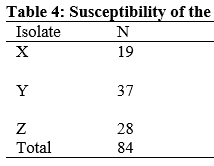
Klebsiella pneumoniae is a significant pathogen threatening maternal health, particularly in developing countries. The rise of antibiotic-resistant strains has worsened treatment outcomes, increasing morbidity and mortality. Limited data exists on K. pneumoniae antibiotic resistance in maternal populations, hindering effective treatment strategies. This study addresses this gap, investigating K. pneumoniae antibiotic resistance patterns in maternal sources to inform evidence-based treatment approaches. This study aimed to characterize K. pneumoniae isolates from maternal sources and determine their antibiotic resistance patterns. Bacterial isolates were obtained from maternal sources and characterized using cultural, morphological, and biochemical tests. Molecular identification was performed using 16S rRNA gene sequencing. Antibiotic susceptibility testing was conducted using the disc diffusion method. Three K. pneumoniae strains KP03, 2014C06-125 and KP2092 (KP03, KP2, and KPK2) were identified, exhibiting characteristic cultural and morphological features. The isolates showed varying levels of resistance to antibiotics, including sulphonamide, amoxicillin, and tetracycline. The overall prevalence of antibiotic resistance was 69.05%, with isolate Y (KP2) showing the highest resistance rate (81.08%). Statistical analysis showed significant differences in resistance patterns among the isolates (p < 0.05). The study highlights the importance of monitoring antibiotic resistance in K. pneumoniae isolates from maternal sources to inform effective treatment strategies. This study provides valuable data on the prevalence of antibiotic-resistant K. pneumoniae in maternal sources, emphasizing the need for judicious use of antibiotics and proper infection control practices.
Downloads
Published
Issue
Section
License
Copyright (c) 2026 U. F. Onwuasoanya, I. H. Iheukwumere, C. M. Iheukwumere, B. C. Unaeze, D. J. Okongwu, O. Abba, P. A. Nnagbo, C. A. Mere (Author)

This work is licensed under a Creative Commons Attribution 4.0 International License.