Acceptance of Insecticide-Treated Nets for Malaria Prevention among Pregnant Women in Omuoko Community, Rivers State, Nigeria
DOI:
https://doi.org/10.54117/sbz28826Keywords:
Insecticide-treated nets, malaria prevention, pregnant women, acceptance, rural Nigeria, Rivers StateAbstract
Background: Malaria in pregnancy poses serious risks in Nigeria, including maternal anemia, low birth weight, preterm delivery, and increased mortality. Insecticide-treated nets (ITNs) are a key, cost-effective preventive measure recommended by the World Health Organization for pregnant women in malaria-endemic areas. Utilization, however, remains inconsistent, especially in rural communities with limited healthcare infrastructure. This study evaluated ITN acceptance among pregnant women in Omuoko Community, Rivers State, Nigeria.
Methods: A descriptive cross-sectional study targeted 100 pregnant women in the community; a sample of 80 was determined using Taro Yamane’s formula (margin of error 0.05) and selected via convenience sampling. Data were collected using a validated, reliable (Pearson r = 0.80) self-structured Likert-scale questionnaire covering socio-demographics, malaria prevention knowledge, ITN acceptance/utilization, and influencing factors. Questionnaires were administered personally over one week, with all 80 retrieved and analyzed in SPSS using frequencies, percentages, means, standard deviations, and chi-square tests. Ethical clearance was obtained from the community chief, with informed consent and confidentiality assured.
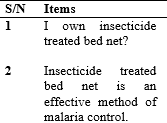
Results: Participants were mainly aged 30–35 years (43.8%), Christian (93.8%), secondary-educated (62.5%), married (68.8%), and farmers/traders (31.3% each). Acceptance was strong: 90.1% agreed/strongly agreed on ITN ownership, 92.5% on effectiveness, 80% on accessibility, 78.8% on ease of use, and 75% on no side effects. All mean scores (1.575–2.000) were rated “Good.”
Conclusion: Pregnant women in this rural setting showed good acceptance of ITNs, with favorable perceptions of their value and practicality. However, barriers such as heat discomfort, hanging challenges, and reliance on traditional birth attendants may limit consistent use. Targeted interventions—improved antenatal distribution, community education, and regular net replenishment—are recommended to bridge the acceptance–utilization gap and reduce malaria burden in similar rural Nigerian communities.
Downloads
Published
Issue
Section
License
Copyright (c) 2026 Fortunate Obianuju Ubochi, Udo Orukwowu, Aleruchi Lenchi Oji, Augusta Eleazar Agharandu

This work is licensed under a Creative Commons Attribution 4.0 International License.