Multilevel Analysis of Socioeconomic and Contextual Determinants of Unsafe Household Waste Disposal in Nasarawa, Nigeria
DOI:
https://doi.org/10.54117/1nvebj37Keywords:
Household waste management, Unsafe waste disposal, Multilevel analysis, Socioeconomic determinants, Municipal waste services, Urban environmental healthAbstract
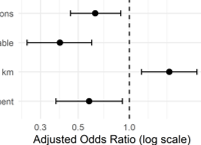
The problem of municipal solid waste management has been worsened by the fast pace of urbanization in low and middle income countries due to lack of proper infrastructure development. Unsafe methods for the disposal of waste at home, such as open dumping or burning, have been identified to occur commonly in many households. They are known to pose major health and environmental risks. This study aimed at investigating the social and environmental determinants of unsafe household waste disposal in urban communities in North-Central Nigeria using a multilevel logistic regression analysis. A cross-sectional study was carried out involving 612 households from 18 communities. Data were obtained from the participants through the administration of structured questionnaires that sought their socio-demographic characteristics and availability of community waste services. Open dumping or burning was the outcome. Its prevalence rate was 44.3%. There existed considerable heterogeneity across communities (ICC=16.3%). %). In the full model, tertiary education (AOR=0.48, 95% CI: 0.31–0.74), high income (AOR=0.54, 95% CI: 0.36–0.81), awareness of sanitation regulations (AOR=0.63, 95% CI: 0.45–0.89), and household size (AOR=1.08, 95% CI: 1.02–1.14) were significant predictors. In the community level, provision of municipal waste collection service facilities was a protective factor against engaging in unsafe behaviors (adjusted odds ratio [AOR] = 0.39; 95% confidence interval [CI]: 0.25–0.60), while being farther away from disposal facilities increased the risks (AOR = 1.72; 95% CI: 1.18–2.50). Unsafe disposal behaviors are thus determined not only by individual socioeconomic factors but also by community-level structural factors.
Downloads
Published
Issue
Section
License
Copyright (c) 2026 Edoh John Ofiegocho, S. D. Gyar, Akyala Ishaku

This work is licensed under a Creative Commons Attribution 4.0 International License.