Effectiveness of Health Education Intervention on Drug Abuse Practices among Undergraduate Students in Taraba State University Jalingo: A Quasi-Experimental Study
DOI:
https://doi.org/10.54117/ijph.v5i3.51Keywords:
Drug abuse, Health education intervention, undergraduate students, behavioral change, quasi-experimental, Nigeria, public healthAbstract
Background: Drug abuse among university students is a growing public health concern in Nigeria, with significant implications for academic performance and long-term well-being. Despite increased awareness efforts, risky substance use practices persist. This study evaluated the effectiveness of a Health Education Intervention (HEI) in modifying drug use and abuse practices among undergraduate students of Taraba State University, Jalingo.
Methods: A quasi-experimental design was employed involving 359 undergraduate students selected through a multi-stage cluster sampling technique. Participants were divided into experimental and control groups. The experimental group received a structured six-week HEI program incorporating drama, interactive discussions, and audio-visual presentations, while the control group received no intervention. Data were collected using a validated and reliable researcher-developed instrument titled Drug Abuse Knowledge, Attitude & Practice Questionnaire (DAKAPO). Pre- and post-intervention data were analyzed using descriptive statistics and ANCOVA to assess the impact of HEI on students’ drug abuse practices across age, gender, and level of study.
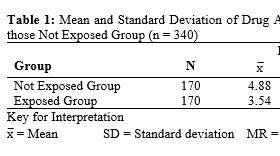
Results: Findings showed a statistically significant reduction in drug abuse practice scores among students in the experimental group compared to the control group (F(1,335)= .056, p=.813). Age, gender, and academic level significantly influenced students’ responsiveness to the intervention. Female students and those aged 21–24 showed greater behavioral improvement. Final-year (400-level) students recorded the highest reduction in risky drug-use practices.
Conclusion: The Health Education Intervention was effective in improving students’ drug-related behavior, especially among certain age and academic groups. These results support the inclusion of targeted health education programs within university curricula to curb substance abuse and promote healthier lifestyles.
Downloads
Published
Issue
Section
License
Copyright (c) 2025 Felix Taiye Michael

This work is licensed under a Creative Commons Attribution 4.0 International License.