Assessment of the Bacteriological Quality of Selected Surface Water Resources in Anambra Central Senatorial Zone Anambra State
DOI:
https://doi.org/10.54117/b8kkjp54Keywords:
Faecal pollution, Public health, Routine monitoring, Sanitary practice, Surface waterAbstract
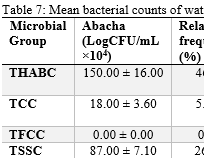
This study assessed the bacteriological quality of selected water sources with particular emphasis on coliform bacteria as indicators of faecal contamination. The water samples were collected from 21 towns and villages in Anambra Central Senatorial Zone, Anambra State. They were analyzed for different bacterial groups using standard microbiological procedures. The result revealed that Awka North had the highest total coliform count of 44.33 ± 1.93 with percentage frequency of 16.60 %, Awka South had the highest total faecal Streptococci count of 20.00± 0.00 with percentage frequency of 11.84 %, Dunukofia had the lowest total Staphylococcus count of 1.33± 0.03 with percentage frequency of 0.58 %, Anaocha had lowest total faecal Streptococci count of 1.67± 0.33 with percentage frequency of 1.19 %, Njikoka had the highest total Pseudomonas count of 13.00±2.08 with percentage frequency of 4.92 %, Idemili South had the highest total Bacillus cereus count of 34.00±3.00 with percentage frequency of 14.49 %, Idemili North had the highest total Salmonella- Shigella count of 69.00±5.70 with percentage frequency of 19.90% respectively. Total coliform counts (TCC) in all samples exceeded the permissible limit of zero total coliforms per 100 mL recommended by the World Health Organization (WHO) for potable water, indicating significant microbial contamination. None of the surface water samples complied with WHO standards, suggesting widespread deterioration of water quality. Elevated faecal coliform and faecal streptococci counts further confirmed substantial faecal pollution, with evidence pointing toward predominant human excreta contamination. Statistical analysis revealed significant differences among sampling sites (F = 2.789, p < 0.0002) and among bacterial groups (F = 4.66, p < 0.0001), indicating spatial variability in contamination levels. Overall, the findings demonstrate that the investigated water sources are microbiologically unsafe for direct human consumption without adequate treatment. The study underscores the urgent need for improved sanitation practices, routine monitoring, and effective water treatment interventions to protect public health.