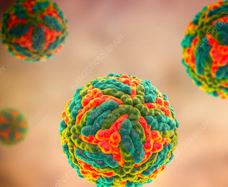
St. Louis Encephalitis Virus and Neuroinvasion: Insights into Virology, Epidemiology, Pathogenesis, Transmission, Clinical Features, and Global Public Health Impact
DOI:
https://doi.org/10.54117/zxqm9392Keywords:
St. Louis Encephalitis Virus, SLEV, Flavivirus, Arbovirus, Encephalitis, Culex Mosquito, Zoonosis, Neuroinvasion, Vector-Borne Disease, Public HealthAbstract
St. Louis encephalitis virus (SLEV) is a mosquito-borne flavivirus endemic to the Americas and a significant cause of arboviral encephalitis. Primarily transmitted by Culex species mosquitoes in an enzootic cycle involving wild birds, SLEV sporadically spills over into human populations, leading to outbreaks of neurological disease. This review aims to synthesize the current understanding of SLEV, encompassing its history, virology, transmission dynamics, clinical manifestations, diagnostic methods, and prevention strategies. It also highlights the emerging challenges and future directions for research and public health intervention. A comprehensive literature review was conducted using scientific databases (e.g., PubMed, Scopus) to collate information on SLEV's molecular biology, epidemiology, pathogenesis, and control.Since its identification in 1933, SLEV has caused numerous outbreaks across North and South America. Its single-stranded positive-sense RNA genome encodes a polyprotein that is cleaved into three structural and seven non-structural proteins. The virus's pathogenesis involves neuroinvasion following a mosquito bite, leading to inflammation of the brain parenchyma. Clinical presentation ranges from a mild febrile illness to severe encephalitis, with advanced age being the most significant risk factor for severe disease and mortality. Diagnosis relies on serological assays (e.g., IgM ELISA) and molecular methods (RT-PCR). No specific antiviral treatment exists; management is supportive. Prevention hinges on integrated vector control and personal protective measures against mosquito bites.SLEV remains a persistent public health threat. Its ecological complexity, co-circulation with other flaviviruses, and the challenges of climate change and urbanization necessitate sustained surveillance, robust diagnostic capabilities, and effective public health messaging to mitigate its impact.