Ziziphus mauritiana Supplement Improved Spatial Working and Recognition Memory in Swiss Albino Mice
DOI:
10.54117/ijt.v3i2.9.2025Published:
2025-05-02Downloads
Abstract
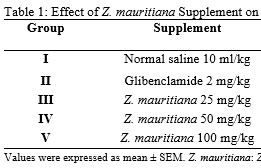
Recognition memory, particularly in the context of spatial tasks, relies on the integration of spatial working memory and long-term memory, with successful performance linked to specific brain activations, such as in the inferior frontal gyrus and hippocampus. Ziziphus mauritiana (Z. mauritiana) is a plant whose bark and leaves exhibit significant antioxidant, anti-inflammatory, antimicrobial and enzyme inhibitory activities. This study aimed to evaluate the effect of Z. mauritiana supplementation on spatial working and recognition memory in Swiss albino mice. Twenty (20) mice weighing between 24 – 30 grams were used for the study. They were divided into five groups of four mice each (N=4). Group I served as control and received 10 ml/kg distilled water; groups II, III, IV and V were given 2 mg/kg glibenclamide, 25 mg/kg, 50 mg/kg and 100 mg/kg of Z. mauritiana for 14 days respectively. Y maze and novel object recognition task were used to assess spatial working, long-term and recognition memories respectively. We observed no significant (p > 0.05) improvement in spatial working memory in all the Z. mauritiana supplemented groups when compared with the control group. Long-term and recognition memories showed significant (p < 0.05) improvement after 14 days of 50 mg/kg of Z. mauritiana administration compared to day 0 of the same group. Thus, Z. mauritiana supplement have no effect on spatial working memory while at 50 mg/kg improved long-term and recognition memories of Swiss albino mice.
Keywords: dementia, long-term memory, spatial working memory, Ziziphus mauritiana.