Synergistic Therapeutic Potential of Curcumin and Quercetin Co-Administration in Alzheimer’s Disease
Insights from Transgenic Drosophila melanogaster Models
DOI:
https://doi.org/10.54117/ijddrr.v3i1.25Keywords:
Alzheimer’s disease, Curcumin, Quercetin, GSK-3β, Oxidative stress, Drosophila melanogasterAbstract
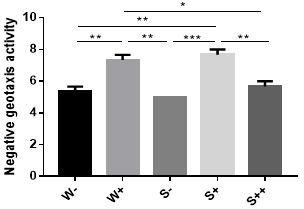
Glycogen Synthase Kinase 3 beta (GSK-3β) activation promotes intracellular neurofibrillary tangles (NFTs) and extracellular amyloid beta plaques formation which are the major hallmarks of Alzheimer’s disease (AD). Oxidative stress and mitochondria dysfunction have been implicated in the perturbation of GSK-3β. Curcumin and quercetin are phytochemicals with antioxidant and anti-inflammatory properties. This study was aimed at investigating the neuroprotective effects of curcumin and quercetin on AD models of Drosophila melanogaster. Flies were grouped into five (5) groups containing one hundred and fifty flies per group. First group (wild control) received distilled water; second group (Wild treated) received 200 mg/kg of curcumin and quercetin; third group (transgenic) received distilled water; fourth group (transgenic+LD) received 50 mg/kg of curcumin and quercetin; fifth group (transgenic + HD) received 200 mg/kg of curcumin and quercetin for duration of five days. Survival assay, climbing assay, catalase, total thiol, acetylcholinesterase, and malondialdehyde level were investigated at the end of treatment duration. Additionally a molecular docking analysis was performed using PyRx and curcumin and quercetin were docked against the implicated protein GSK-3β and this showed higher binding affinities than the standard. This study showed that curcumin and quercetin improved locomotor activity and survival rate and increased total thiols levels and catalase activity and decreased MDA and AChE activities. Overall curcumin and quercetin ameliorated AD in D. melanogaster. Therefore, co-administration can be regarded as a possible therapeutic agent for AD.
Downloads
Published
How to Cite
Issue
Section
License
Copyright (c) 2025 Olukayode Olusola Odubela, Afeez John Olanrewaju, Eniekezimene Deborah Daniel

This work is licensed under a Creative Commons Attribution 4.0 International License.