Comparative Assessment of the In vitro Antioxidant Activity and Phytochemical Analysis of Vernonia amygdalina Leaf and Ocimum gratissimum Leaf
DOI:
https://doi.org/10.54117/ijddrr.v3i2.33Keywords:
Vernonia amygdalina, Ocimum gratissimum, antioxidant activity, phytochemical screening, reactive oxygen speciesAbstract
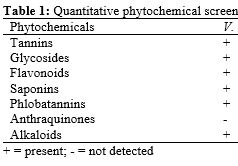
Vernonia amygdalina and Ocimum gratissimum are a major part of the diet in many Nigerian families due to their wide culinary applications and appeal. This study, therefore, compared the in-vitro antioxidant activity and phytochemical content of the extracts of these two plants. The methanol extracts of freshly plucked leaves of Vernonia amygdalina and Ocimum gratissimum were obtained and extracted using standard procedures. The phytochemical composition and in-vitro antioxidant parameters (nitric oxide and hydrogen peroxide) were assessed. The results of the phytochemical screening of methanol leaf extracts of V. amygdalina and O. gratissimum showed the presence of tannins, glycosides, flavonoids, saponins, phlobatannins, and alkaloids, while anthraquinones were absent in V. amygdalina but present in O. gratissimum. The results showed that the methanol leaf extracts of V. amygdalina and O. gratissimum were able to scavenge nitric oxide in a dose-dependent manner. A concentration of 20 µg/ml gave the least percentage nitric oxide scavenging activity (34.45 ± 0.08 and 40.21 ± 0.22), while a concentration of 100 µg/ml gave the highest percentage scavenging activity (65.20 ± 0.11 and 77.31 ± 0.14), respectively. The results also showed that the methanol leaf extracts of V. amygdalina and O. gratissimum were able to scavenge hydrogen peroxide (H₂O₂) in a dose-dependent manner. A concentration of 20 µg/ml gave the least percentage scavenging activity (38.20 ± 0.32 and 50.21 ± 0.23), while a concentration of 100 µg/ml gave the highest percentage scavenging activity (69.36 ± 0.19 and 78.25 ± 0.28), respectively. Ocimum gratissimum showed better nitric oxide and H₂O₂ percentage scavenging activity when compared with similar doses of Vernonia amygdalina, but demonstrated lower nitric oxide and H₂O₂ scavenging ability when compared with the standard antioxidant, ascorbic acid. The study further validates the phytochemical constituents and antioxidant activity of the two plants, supporting their traditional use and suggesting potential leads for developing plant-based therapeutic drugs. Incorporating these vegetables into the diet is also encouraged to help mitigate the harmful effects of reactive oxygen species.
Downloads
Published
How to Cite
Issue
Section
License
Copyright (c) 2025 C. C. Ilechukwu, C. O. Ezenwelu, J. C. Ifemeje , J. N. Ilechukwu, I. H. Iheukwumere

This work is licensed under a Creative Commons Attribution 4.0 International License.