Assessment of the Phytochemical and Antibacterial Profiles of Aqueous and Ethanolic Extracts of Garcinia Kola Seed
DOI:
https://doi.org/10.54117/ijddrr.v3i2.39Keywords:
Antibacterial, Antimicrobial resistance, Garcinia kola, Pharmaceutical industries, PhytochemicalAbstract
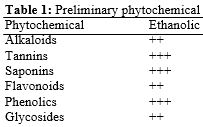
Plants remain a major resource in traditional medicine, with growing evidence of their therapeutic effectiveness. Phytochemical screening of medicinal plants is therefore vital to identify potential sources of bioactive compounds for pharmaceutical applications. This study investigated the phytochemical constituents and antibacterial activity of aqueous and ethanolic extracts of Garcinia kola seed. Standard techniques were employed to detect tannins, phlobotannins, saponins, steroids, terpenoids, phenolics, flavonoids, alkaloids, resins, and glycosides. The extracts revealed the presence of alkaloids, tannins, saponins, flavonoids, phenolics, glycosides, phlobotannins, and resins. Antibacterial activity was evaluated using the agar-well diffusion method against Proteus sp., Escherichia coli, Enterobacter sp., and Erwinia sp. Minimum Inhibitory Concentrations (MIC) and Minimum Bactericidal Concentrations (MBC) were determined by two-fold serial dilution. Both ethanolic and aqueous extracts at 400 mg/mL inhibited the test organisms. E. coli showed the least inhibition zones (5.85 ± 0.15 mm and 9.33 ± 1.25 mm for aqueous and ethanolic extracts, respectively), while Erwinia sp. exhibited the highest inhibition (8.00 ± 1.0 mm and 15.75 ± 2.20 mm, respectively). The ethanolic extract consistently demonstrated stronger activity than the aqueous extract. MIC values ranged between 200 and 400 mg/mL for the ethanolic extract, while MBC was observed at 400 mg/mL. MIC values were lower than MBC, indicating that the extracts are primarily bacteriostatic at lower concentrations and bactericidal at higher ones. Inhibitory effects differed significantly (P < 0.05) among extracts and controls. The findings suggest that G. kola seed possesses valuable phytochemicals with antibacterial properties, supporting its use in traditional medicine. Further research and funding are recommended to isolate and characterize the active compounds, which may provide effective alternatives in the treatment of modern-day infections.
Downloads
Published
How to Cite
Issue
Section
License
Copyright (c) 2025 M. M. C. Ezeamama, E. I. Chukwura, B. O. Uba, I. H. Iheukwumere, V. G. Awari, V. E Ike, K. C. Agu

This work is licensed under a Creative Commons Attribution 4.0 International License.