Synergistic Anti-Enteric Fever Activity of Azithromycin and Hyalophora cecropia Cecropins
DOI:
10.54117/ijbcm.v3i1.61Published:
2026-02-14Issue:
Vol. 3 No. 1 (2026): Jan-MarKeywords:
Salmonella enterica, azithromycin, cecropins, antibacterial activity, combination therapy, enteric feverArticles
Downloads
How to Cite
Abstract
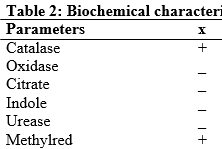
The escalating threat of antibiotic-resistant enteric fever pathogens has diminished treatment efficacy, necessitating innovative solutions. Azithromycin's potency is compromised by resistance, while Hyalophora cecropia cecropins show promise as alternative agents. This study addresses the need for a synergistic approach combining azithromycin and cecropins to combat enteric fever, enhancing treatment outcomes and mitigating resistance.S. enterica isolates were characterized using cultural, morphological, and biochemical tests. Molecular identification was performed using 16S rRNA gene sequencing. The antibacterial activity of azithromycin and cecropins was assessed using the disc diffusion method. Three S. enterica subspecies enterica serovar Typhi strains CMSCT, R192829 and WGS1146 (STCM, STRL, and STWG) were identified, exhibiting characteristic cultural, morphological, and biochemical features. Azithromycin showed moderate inhibition zones (16.00-17.67 mm), while cecropins exhibited inhibition zones of 14.50-17.90 mm. Although the azithromycin-cecropins combination was not directly tested, the combination of azithromycin with clarithromycin (CLA+AZT) showed significantly higher inhibition zones (23.73-27.31 mm) compared to azithromycin alone (p < 0.01). The study suggests that azithromycin and cecropins have antibacterial activity against S. enterica isolates, and combination therapy may provide a potential therapeutic approach against enteric fever. This study generates insights into the antibacterial efficacy of azithromycin and cecropins against S. enterica, highlighting the potential of combination therapy to combat antibiotic resistance.
Author Biographies
B. C. Unaeze, Department of Medical Microbiology and Parasitology, Faculty of Basic Clinical Sciences, Nnamdi Azikiwe University, Nnewi Campus, Nigeria
I. H. Iheukwumere, Department of Microbiology, Faculty of Natural Sciences, Chukwuemeka Odumegwu Ojukwu University, Uli, Campus, Anambra State, Nigeria.
C. M. Iheukwumere, Department of Applied Microbiology and Brewing, Faculty of Biosciences, Nnamdi Azikiwe University, Awka, Nigeria.
C. A. Mere, Department of Biochemistry, Chukwuemeka Odumegwu Ojukwu University, Uli Campus.
P. A. Nnagbo, Department of Microbiology, Imo State University, Owerri.
License
Copyright (c) 2026 B. C. Unaeze, I. H. Iheukwumere, C. M. Iheukwumere, C. A. Mere, P. A. Nnagbo

This work is licensed under a Creative Commons Attribution 4.0 International License.