Development of Arduino-Based Cyclic Voltammetry Analyzer for Semiconductor Growth
DOI:
https://doi.org/10.54117/ijps.v3i1.28Keywords:
Cyclic Voltammetry Analyzer, Potentiostat, Arduino - based Microcontroller, Semiconductors, PotentialAbstract
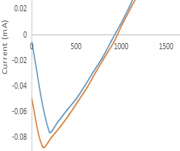
This paper presents the development of a for use in growing semiconductor thin film materials. The cyclic voltammetry analyzer is a potentiostat designed for the purpose of performing cyclic voltammograms and thin films growth. The cyclic voltammetry analyzer was developed using an Arduino mega microcontroller unit, a 12-bit analog to digital converter, a 4x4 matrix keyboard, a digital liquid crystal display unit, and a data logger. Sets of probes were used in connecting the working electrode and counter electrodes inserted in the prepared electrolytic bath containing the various ions to be deposited to the potentiostat which controls the supplied current to the electrode. The microcontroller was programmed using Arduino C code to apply the potential sweep and record the current response for the cyclic voltammogram of the sample (working electrode). The cyclic voltammograms of zinc sulfide (ZnS), cadmium sulfide (CdS), and aluminum gallium selenide (AlGaSe) were analyzed using current and voltage data from the developed instrument to determine the suitable potential range for electrodepositing the semiconductor. The results obtained in this work showed compatibility with the obtainable results in the literature.
Downloads
Published
How to Cite
Issue
Section
License
Copyright (c) 2026 O. I. Olusola, T. I. Ogunniyi, T. A. Obagade, K. D. Adedayo, T. Ewetumo

This work is licensed under a Creative Commons Attribution 4.0 International License.