Exploring the Hepato-protective Potential of Activated Charcoal in Carbon Hydrochloride-Induced Liver Injury in Wistar Rats: A Controlled Experimental Study
DOI:
10.54117/fhdfcx19Published:
2026-04-21Downloads
Abstract
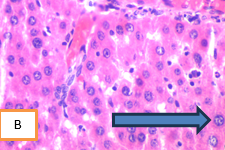
Carbon tetrachloride (CCl₄) is a potent hepatotoxin that induces liver injury via oxidative stress and lipid peroxidation. This study evaluated the hepatoprotective effect of activated charcoal against CCl₄-induced liver damage in Wistar rats. Twelve Wistar rats were divided into three groups (n = 4): control, CCl₄-treated, and CCl₄ plus activated charcoal-treated. CCl₄ (1 ml/kg; 1:9 in olive oil) was administered intraperitoneally twice weekly, while activated charcoal (1 g/kg) was administered orally daily for 28 days. Serum liver enzymes (AST, ALT, ALP), body weight, and liver weight were assessed. Histological evaluation was performed using hematoxylin and eosin staining. CCl₄ induced significant hepatic injury characterised by necrosis and inflammation. Activated charcoal attenuated these changes histologically. However, no statistically significant differences (p > 0.05) were observed in biochemical parameters or body/liver weights. Activated charcoal demonstrates partial hepatoprotection at the histological level. Histopathology remains a sensitive tool for detecting early liver injury.
Keywords:
Carbon tetrachloride, Activated charcoal, Hepatotoxicity, Oxidative stress, HistopathologyLicense
Copyright (c) 2026 S. I. Ogenyi, A. O. Ike

This work is licensed under a Creative Commons Attribution 4.0 International License.