
Vancomycin-Resistant Staphylococcus aureus in Abattoir Workers in Jos, Nigeria: Prevalence and Public Health Implications
DOI:
10.54117/ijamb.v4i4.101Published:
2025-11-07Issue:
Vol. 4 No. 4 (2025): Oct-DecKeywords:
Staphylococcus aureus, Vancomycin-resistant, MRSA, Abattoir workers, Zoonotic transmission, Antibiotic resistanceArticles
Downloads
How to Cite
Downloads
Abstract
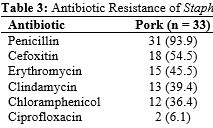
Background: Staphylococcus aureus, including vancomycin-resistant strains (VRSA), poses treatment challenges. Abattoir workers, due to animal contact, risk carrying resistant strains, but VRSA prevalence in Nigerian abattoirs is understudied. Aim: This study aimed to determine the prevalence of S. aureus and VRSA among abattoir workers in Jos, Nigeria, to assess occupational and public health risks. Methods: A cross-sectional study was conducted from January to June 2024 at three major abattoirs in Jos, Plateau State. Hand swabs (n=180) were collected from 60 workers (20 each from pork, beef, and mutton/chevon sections) during working hours. Swabs were cultured on Mannitol Salt Agar, and S. aureus was identified using Gram staining, catalase, coagulase, and DNase tests. Antibiotic susceptibility was assessed via Kirby-Bauer disk diffusion, and vancomycin minimum inhibitory concentrations (MICs) were determined by broth macrodilution. Results: Of 180 swabs, 84 (46.7%, 95% CI: 39.2–54.3%) were positive for S. aureus, with prevalence highest among pork handlers (33/60, 55.0%, 95% CI: 41.6–67.9%), followed by beef (30/60, 50.0%, 95% CI: 36.8–63.2%) and mutton/chevon handlers (21/60, 35.0%, 95% CI: 23.1–48.4%). Among 84 isolates, 36 (42.9%) were methicillin-resistant (MRSA), with 18 (50.0%) from pork, 12 (33.3%) from beef, and 6 (16.7%) from mutton/chevon handlers. Vancomycin testing revealed 9 (10.7%) VRSA isolates (MIC ≥ 16 µg/mL), predominantly from pork handlers (5/9, 55.6%), 12 (14.3%) vancomycin-intermediate (VISA, MIC 4–8 µg/mL), and 63 (75.0%) vancomycin-susceptible (VSSA, MIC ≤ 2 µg/mL). MRSA prevalence was significantly higher in pork handlers (χ² = 8.14, p = 0.017). Conclusion: The high prevalence of S. aureus, MRSA, and VRSA among abattoir workers underscores significant occupational and public health risks. Enhanced infection control and antibiotic stewardship are critical in Nigerian abattoirs.
Author Biographies
Ocheme J. Okojokwu, Department of Microbiology, Faculty of Natural Sciences, University of Jos, Jos-Nigeria.
Nanya A. Cirfat, Department of Microbiology, Faculty of Natural Sciences, University of Jos, Jos-Nigeria.
Isaac J. Gwan, Department of Biological Sciences, Faculty of Science & Computing, Karl Kümm University, Vom, Plateau State, Nigeria.
Ifeanyi C. Orah, Department of Microbiology, Faculty of Natural Sciences, University of Jos, Jos-Nigeria.
License
Copyright (c) 2025 Ocheme J. Okojokwu, Nanya A. Cirfat, Isaac J. Gwan, Ifeanyi C. Orah

This work is licensed under a Creative Commons Attribution 4.0 International License.
CC BY 4.0