
Prevalence and Molecular Detection of Hepatitis C Virus Infection among Inmates in Jos Correctional Centre, Plateau State, Nigeria
DOI:
10.54117/ijamb.v4i4.102Published:
2025-11-07Issue:
Vol. 4 No. 4 (2025): Oct-DecKeywords:
Hepatitis C Virus, Prevalence, Molecular detection, Correctional Centre, Nigeria, Inmates, Risk factorsArticles
Downloads
How to Cite
Downloads
Abstract
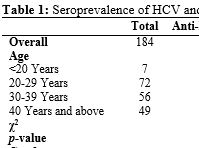
Background: Hepatitis C virus (HCV) poses a significant global health burden, with prevalence in correctional facilities far exceeding that of the general population. Data on HCV in Nigerian prisons are scarce, hindering public health planning. Objective: This study aimed to determine the seroprevalence, active infection rate, and risk factors for HCV among inmates in Jos Correctional Centre, Nigeria. Methods: In a cross-sectional study, 184 inmates were randomly selected. Serum samples were tested for anti-HCV antibodies using a rapid diagnostic test. Active infection was confirmed through HCV RNA detection by real-time PCR. Associations with demographic and behavioural factors were analysed using chi-square and logistic regression. Results: The overall seroprevalence was 12.0% (22/184): while the active infection rate was 8.2% (15/184). Active infection was significantly higher in males (8.4%) than females (5.9%) (p = 0.045). In multivariate analysis, being divorced or widowed was the strongest independent predictor of active infection (Adjusted Odds Ratio = 7.51, 95% CI: 1.09-51.82, p = 0.041). Trends of increased odds were observed for informal employment and needle sharing, though these were not statistically significant. Traditional risk factors like injection drug use and sexual behaviours showed no significant association. Conclusion: We found a moderate but significant burden of active HCV infection in this Nigerian prison, driven more by sociodemographic factors like marital status than traditional risk behaviours. These findings advocate for targeted screening, treatment, and health education within correctional facilities as a key strategy for HCV micro-elimination in Nigeria.
Author Biographies
Ocheme J. Okojokwu, Department of Microbiology, Faculty of Natural Sciences, University of Jos, Jos-Nigeria.
Jennifer M. Nyigba, Department of Microbiology, Faculty of Natural Sciences, University of Jos, Jos-Nigeria.
Joseph A. Anejo-Okopi, Department of Microbiology, Faculty of Science, Federal University of Health Sciences, Otukpo, Benue State, Nigeria
License
Copyright (c) 2025 Ocheme J. Okojokwu, Jennifer M. Nyigba, Joseph A. Anejo-Okopi

This work is licensed under a Creative Commons Attribution 4.0 International License.
CC BY 4.0