
Prevalence and Antibiotic Resistance Patterns of Multidrug-Resistant Bacteriuria among Asymptomatic Pregnant Women in Awka, Nigeria
DOI:
10.54117/ijamb.v6i2.148Published:
2026-04-04Issue:
Vol. 6 No. 2 (2026): Apr-JunKeywords:
Multidrug resistance, Staphylococcus aureus, Staphylococcus epidermidis, Escherichia coli,, pregnancy, asymptomatic bacteriuriaArticles
Downloads
How to Cite
Downloads
Abstract
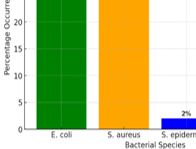
Multi-drug resistant (MDR) bacteria represent a significant public health threat, especially among vulnerable groups such as children and pregnant women. This study aimed to determine the prevalence of MDR Staphylococcus aureus, Staphylococcus epidermidis, Escherichia coli, and Proteus mirabilis in asymptomatic pregnant women, as these organisms are known to cause urinary tract infections. A total of 100 participants were involved in the study, from whom midstream clean-catch urine samples were collected during their antenatal visit. Bacterial isolates were identified macroscopically and microscopically, and antibiotic susceptibility was assessed using the Kirby-Bauer disk diffusion method. Results indicated a 33% S. aureus positive sample and 2% S. epidermidis. Among Gram-negative isolates, E. coli was the most prevalent (36%), and none of the urine samples was infected with P. mirabilis. Alarmingly, all isolates exhibited resistance to multiple antibiotic classes, with high rates of resistance to commonly used antibiotics, including amoxicillin-clavulanate, imipenem-cilastatin, cefuroxime, and cefotaxime. This study underscores the urgent need for enhanced antimicrobial stewardship and routine screening for asymptomatic bacteriuria (ASB) in pregnant women to reduce the risk of antibiotic-resistant infections.
Author Biographies
Chinelo K. Ezejiegu, Department of Pharmaceutical Microbiology and Biotechnology, Faculty of Pharmaceutical Sciences, Nnamdi Azikiwe University, Awka, Nigeria. P.M.B. 5025.
Jessica N. Edwin, Department of Pharmaceutical Microbiology, Faculty of Pharmaceutical Sciences, Nnamdi Azikiwe University, Awka
Benjamin O. Anyigor, epartment of Pharmaceutical Microbiology and Biotechnology, Faculty of Pharmaceutical Sciences, Nnamdi Azikiwe University, Awka, Nigeria. P.M.B. 5025.
Ezinne C. Anietoh, Department of Pharmaceutical Microbiology and Biotechnology, Faculty of Pharmaceutical Sciences, University on the Niger, Umunya, Nigeria.
C. Emmanuel Ezejiegu, Department of Ophthalmology, Chukwuemeka Odumegwu Ojukwu University Teaching Hospital, Awka, Nigeria.
License
Copyright (c) 2026 Chinelo K. Ezejiegu, Jessica N. Edwin, MacAnthony U. Nwokoibem, Benjamin O. Anyigor, Ezinne C. Anietoh, C. Emmanuel Ezejiegu

This work is licensed under a Creative Commons Attribution 4.0 International License.
CC BY 4.0