
Spoilage Dynamics, Microbial Ecology, and Comparative Antimicrobial Efficacy of Selected Spice Extracts against Foodborne Isolates from Meat and Tomato
DOI:
10.54117/ijamb.v6i2.149Published:
2026-05-02Issue:
Vol. 6 No. 2 (2026): Apr-JunKeywords:
Food spoilage dynamics, Microbial ecology, Ginger antimicrobial activity, Natural food preservatives and Foodborne pathogensArticles
Downloads
How to Cite
Downloads
Abstract
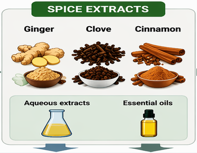
Food spoilage remains a major challenge affecting food safety, quality, and shelf-life, particularly in perishable products such as meat and fresh produce. This study comparatively evaluated spoilage dynamics, microbial ecology, and the antimicrobial efficacy of selected spice extracts (ginger, clove, and cinnamon) against foodborne pathogens isolated from spoiled beef and tomato samples. Physicochemical analysis revealed a significant increase (p < 0.05) in pH during spoilage, with beef showing a greater shift (6.6 ± 0.10 to 8.7 ± 0.15) than tomato (4.5 ± 0.08 to 6.0 ± 0.12). Microbial growth patterns indicated rapid proliferation in beef, reaching too numerous to count (TNTC) levels earlier than in tomato. Microbial identification showed the dominance of Listeria monocytogenes (48.0%) in beef, while Bacillus cereus (77.5%) predominated in tomato samples. Phytochemical screening confirmed the presence of bioactive compounds, including flavonoids, glycosides, and triterpenoids, in all plant extracts. Antimicrobial assays demonstrated that ginger extract exhibited the highest inhibitory activity, with the lowest minimum inhibitory concentration (MIC) (0.50 ± 0.02 mg/mL) against multiple isolates, while clove showed moderate activity and cinnamon showed no observable effect. These findings highlight the strong potential of ginger as a natural antimicrobial agent for food preservation. The study provides valuable insights into spoilage mechanisms and supports the application of plant-based preservatives as sustainable alternatives to synthetic additives to enhance food safety and shelf life.
Author Biographies
Chidinma A. Okafor, Department of Biological Sciences, Godfrey Okoye University, Enugu, Nigeria.
Ruth E. Ugwu , Department of Biological Sciences, Godfrey Okoye University, Enugu, Nigeria.
Joshua M. Akwah, Department of Biological Sciences, Godfrey Okoye University, Enugu, Nigeria.
License
Copyright (c) 2026 Chidinma A. Okafor, Ruth E. Ugwu , Joshua M. Akwah

This work is licensed under a Creative Commons Attribution 4.0 International License.
CC BY 4.0