
Evaluation of Chemical Profile of Organic Waste Compost Accelerated Via Microbial and Nanocomposite Amendments
DOI:
10.54117/ijamb.v6i2.153Published:
2026-04-22Issue:
Vol. 6 No. 2 (2026): Apr-JunKeywords:
Composting, Compost maturity, Effective microorganisms, Magnesium nanocomposite, Nutrient dynamics, Waste managementArticles
Downloads
How to Cite
Downloads
Abstract
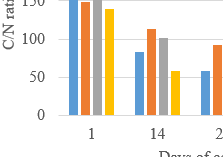
Microbial activities are capable of accelerating some biological processes such as biodegradation of materials in the environment. This study was carried out to evaluate the chemical profile of organic waste compost accelerated via microbial and nanocomposite amendments. The beneficial microbes ((Bacillus species, Candida species, and Enterobacter species) that were used to accelerate composting of the selected substrates were isolated from soil, roots of soy bean, and ripe pineapple using microbiological standard techniques. The ability of the beneficial microorganisms to degrade complex organic and inorganic matter in compost was evaluated using substrates from leftover food, fruit and vegetable, and papers. The required conditions for optimum conversion of the substrates such as moisture and aeration were provided throughout the duration of 56 days. Key physicochemical parameters, including pH, carbon-to-nitrogen (C/N) ratio, phosphorus, potassium, ammonium-nitrate ratio, and trace metals (zinc and copper), were monitored throughout the composting period. Initial characterization revealed significant variation in substrate quality, with paper waste exhibiting a high C/N ratio (173:1) and food waste showing a lower ratio (24:1), indicating differing biodegradability potentials. During composting, pH increased across all treatments, approaching near-neutral conditions by week eight. A substantial reduction in C/N ratio was observed, with the consortium treatment achieving the lowest value (13:1), indicating advanced compost maturity. Nutrient enrichment was evident, particularly in phosphorus and potassium, with the consortium and magnesium nanocomposite treatments showing superior performance. The ammonium-nitrate ratio declined significantly across treatments, reflecting enhanced nitrogen stabilization. Trace metal dynamics indicated reduced zinc and copper concentrations in treated setups compared to control. Overall, microbial consortium and magnesium nanocomposite amendments significantly improved compost quality and maturity compared to control conditions. These findings highlight the potential of combined biological and nanotechnological approaches in optimizing composting processes for sustainable waste management.
Author Biographies
J. O. Ofunwa, Department of Microbiology, Faculty of Natural and Applied Sciences, Tansian University, P.M.B. 0006 Umunya, Anambra State, Nigeria.
B. U. Anyanwieze, Southeast Missouri State University, United States.
License
Copyright (c) 2026 J. O. Ofunwa, B. U. Anyanwieze

This work is licensed under a Creative Commons Attribution 4.0 International License.
CC BY 4.0