Growth and Immune Benefits of Lactobacillus-Fermented Banana Peel in Broiler Chicks
DOI:
10.54117/ijamb.v6i2.158Published:
2026-04-28Issue:
Vol. 6 No. 2 (2026): Apr-JunKeywords:
Lactobacillus acidophilus, fermented banana peel, body weight, lymphocytes, immunopotentiation, broiler chicksArticles
Downloads
How to Cite
Downloads
Abstract
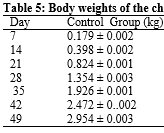
The rising prevalence of metabolic and immune disorders has intensified interest in accessible dietary interventions that simultaneously influence body weight and immunological parameters. Banana peel, an abundant agricultural waste product, has recently gained recognition as a valuable substrate for probiotic fermentation, yielding a functional ingredient rich in fermentable fiber and phenolic compounds. This study investigated the effect of a Lactobacillus-fermented banana peel supplement on the body weight and blood lymphocyte levels of broiler chicks, addressing the dual challenge of agro-waste valorization and sustainable poultry nutrition. Banana peel was fermented using an isolated strain, which was rigorously characterized through cultural, biochemical, and molecular analysis and definitively identified as Lactobacillus acidophilus strain DSM20079 (100% 16S rRNA gene identity, Accession CP020620.1). In a seven-week feeding trial, chicks receiving the fermented supplement exhibited a final mean body weight of 3.824 ± 0.004 kg, which was significantly higher (p < 0.01) than the control group's 2.954 ± 0.003 kg, demonstrating a potent growth-promoting effect. Concurrently, hematological analysis revealed a significant immunomodulatory outcome: the test group administered a 100 mg/g dose exhibited a mean total lymphocyte count of 276.46 ± 1.01, a value significantly elevated (p < 0.001) above the normal control (152.16 ± 1.02) and slightly exceeding the standard immunostimulant levamisole (273.19 ± 1.21). These results indicate that the synbiotic product not only enhances nutrient bioavailability and weight gain but also robustly stimulates systemic cellular immunity. The findings confirm that solid-state fermentation with a precisely identified probiotic strain can transform banana peel into a multifunctional feed additive that simultaneously improves zootechnical performance and immune status, offering a viable strategy for waste-to-resource conversion in sustainable animal production.
Author Biographies
M. N. Okeke, Department of Agricultural Economics and Extension, Chukwuemeka Odumegwu Ojukwu University, Anambra State.
I. E. Okoye, Department of Agricultural Technology, Federal Polytechnic Oko, Anambra State.
I. H. Iheukwumere, Department of Microbiology, Faculty of Natural Sciences, Chukwuemeka Odumegwu Ojukwu University, Uli, Campus, Anambra State, Nigeria.
C. M. Iheukwumere, Department of Applied Microbiology and Brewing, Faculty of Biosciences, Nnamdi Azikiwe University, Awka, Nigeria.
M. I. Nwachukwu, Department of Microbiology, Imo State University, Owerri, Imo State.
I. O. Nwachukwu, Department of Microbiology, Imo State University, Owerri, Imo State.
I. A. C. Mbachu, Department of Microbiology, Faculty of Natural Sciences, Chukwuemeka Odumegwu Ojukwu University, Uli, Campus, Anambra State, Nigeria.
License
Copyright (c) 2026 M. N. Okeke, I. E. Okoye, I. H. Iheukwumere, C. M. Iheukwumere, M. I. Nwachukwu, I. O. Nwachukwu, I. A. C. Mbachu

This work is licensed under a Creative Commons Attribution 4.0 International License.
CC BY 4.0