
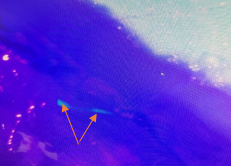
An Ultraviolet Light-Assisted Method for the Retrieval of Fluorescent Implanted Monofilaments in Insect Larvae for Encapsulation Assays Using Zophobas morio as a Model
DOI:
10.54117/ijamb.v6i2.159Published:
2026-05-01Issue:
Vol. 6 No. 2 (2026): Apr-JunKeywords:
Encapsulation assay, ultraviolet light (UV), monofilament retrieval, Zophobas morio, insect immunity, detection efficiency, fluorescent fishing line, improved methodArticles
Downloads
How to Cite
Downloads
Abstract
Encapsulation assays are widely used in eco immunology to assess insect immune responses against foreign bodies and simulated parasitic challenges. However, locating implanted monofilaments during recovery can be difficult, time consuming, and highly dependent on the experience and mastery of the observer, particularly in conditions where surrounding tissues make the filament difficult to see for retrieval. This study presents a simple and cost-effective ultraviolet assisted method for improving the localization of implanted ultraviolet reactive monofilaments in insect larvae using fluorescent fishing lines. Using Zophobas morio as a model organism, detection time was compared under conventional lighting using the microscope and UV illumination across conditions with different surrounding tissues. Detection time served as a measure of retrieval efficiency. Ultraviolet illumination substantially reduced the time required to locate and retrieve implanted monofilaments, with the greatest improvements observed in cellulose-treated larvae, where surrounding tissues made filament detection more difficult and detection time decreased by approximately 57–86%. The differences between the two detection methods were smaller and less consistent under wheat bran conditions. Successful monofilament recovery was achieved across all treatments, demonstrating that the ultraviolet assisted approach improves efficiency, with the new method providing a quick, accessible, and reproducible approach. Because of its simplicity, this method can be used in host–pathogen studies and other research involving implanting objects to mimic foreign bodies.
Author Biographies
Bridget Ugochi Anyanwueze, Department of Biology, Southeast Missouri State University, Cape Girardeau, Missouri, USA.
Maria Ada Ameh, Department of Biology, Southeast Missouri State University, Cape Girardeau, Missouri, USA.
Paul Uchechukwu Ebo, Department of Microbiology, Tansian University, Umunya, Anambra State, Nigeria.
License
Copyright (c) 2026 Bridget Ugochi Anyanwueze, Maria Ada Ameh, Lucas J. Kirschman, Paul Uchechukwu Ebo

This work is licensed under a Creative Commons Attribution 4.0 International License.
CC BY 4.0