
Bioprocess Optimization of Alkaline Protease Production by Bacillus tropicus: Effects of Culture Conditions and Nutritional Factors
DOI:
10.54117/ijamb.v6i2.162Published:
2026-05-08Issue:
Vol. 6 No. 2 (2026): Apr-JunKeywords:
Alkaline protease, Bacillus tropicus, Enzyme optimization, Fermentation parameters, Industrial biotechnology, Protease kineticsArticles
Downloads
How to Cite
Downloads
Abstract
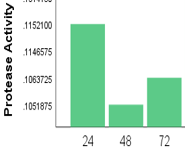
This study investigated the isolation, characterization, and optimization of alkaline protease production by a bacterial isolate obtained from fish pond (FW) and poultry farm (PW) water samples. Serial dilutions 10−2 and 10−3 were cultured on skim milk agar at 37 °C and pH 9 for 72 h. Among the isolates, PW10⁻²A2 exhibited the highest proteolytic activity with a zone of hydrolysis (ZOH) of 13 mm, compared to PW10⁻²A1 (4 mm) and PW10⁻²B2 (2 mm). Morphological and biochemical characterization identified the isolate as a Gram-positive, motile, endospore-forming rod with broad carbohydrate utilization and enzymatic capabilities, consistent with Bacillus tropicus. The Optimization studies revealed that maximum protease production occurred at 96 h (0.1420 Umol/mL; 5.6807 µmol tyrosine released; biomass 1.912 OD₆₀₀), while minimum production was observed at 48 h (0.1052 Umol/mL; 4.2075 µmol tyrosine; biomass 1.286 OD₆₀₀). Among carbon sources, rice bran yielded the highest activity (0.1567 Umol/mL), whereas maltose showed the lowest (0.1085 Umol/mL). Beef extract was the best organic nitrogen source (0.1671 Umol/mL), while ammonium nitrate (NH₄NO₃) was the most effective overall nitrogen source (0.17435 Umol/mL). Optimal enzyme production occurred at pH 9 (0.1425 Umol/mL) and 35 °C (0.0703 Umol/mL). Maximum yield was achieved with 2.5 mL inoculum size (0.1314 Umol/mL), 96 h inoculum age (0.1305 Umol/mL), and agitation speed of 220 rpm (0.0605 Umol/mL). One-way ANOVA demonstrated that incubation time, carbon and nitrogen sources, pH, temperature, inoculum size, inoculum age, and agitation significantly influenced protease production (p < 0.05). Maximum enzyme yield was obtained under optimized conditions (96 h, pH 9, 35 °C, rice bran, NH₄NO₃, 2.5 mL inoculum, 220 rpm). Correlation analysis indicated that enzyme production was not strictly growth-associated (r = 0.42). The study demonstrates that Bacillus tropicus PW10⁻²A2 is a potent alkaline protease producer with significant industrial potential, particularly for applications in detergent and leather processing industries.
Author Biographies
P. O. Umennadi, Department of Microbiology, Chukwuemeka Odumegwu Ojukwu University Uli, Anambra State, Nigeria.
E. N. Chukwura, Department of Microbiology, Chukwuemeka Odumegwu Ojukwu University Uli, Anambra State, Nigeria.
B. O. Uba, Department of Microbiology, Chukwuemeka Odumegwu Ojukwu University Uli, Anambra State, Nigeria.
S. C. Afulukwe, Department of Public Health, Tansian University Oba Anambra State.
L. Eleanya, Department of Microbiology, Chukwuemeka Odumegwu Ojukwu University Uli, Anambra State, Nigeria.
O. H. Obiefuna, Department of Microbiology, Chukwuemeka Odumegwu Ojukwu University Uli, Anambra State, Nigeria.
E. C. Anaebonam, Department of Medical Laboratory Sciences, Chukwuemeka Odumegwu Ojukwu University, P.M.B. 02 Uli, Anambra State, Nigeria.
V. G. Awari, Department of Microbiology, Faculty of Natural and Applied Sciences, Tansian University, Umunya, Anambra State, Nigeria.
License
Copyright (c) 2026 P. O. Umennadi, E. N. Chukwura, B. O. Uba, S. C. Afulukwe, L. Eleanya, O. H. Obiefuna, E. C. Anaebonam, V. G. Awari

This work is licensed under a Creative Commons Attribution 4.0 International License.
CC BY 4.0