Effects of Newcastle Disease Virus on Embryonic Body Weight and Structural Development of Chicken Embryo
DOI:
10.54117/ijt.v3i2.10.2025Published:
2025-05-28Downloads
Abstract
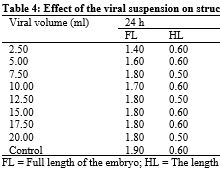
Newcastle disease is a viral disease that mostly affects poultry birds. It is highly contagious and can cause a high mortality rate. It is endemic in many parts of the world and leads to devastating economic losses in the poultry industry. To determine the capacity of the Newcastle disease virus to affect the egg weight, embryonic weight and structural features of embryonated chicken eggs, 9-day-old chicken embryos were inoculated with different dilutions of the virus prepared by dissolving a vial of the viral stock in corresponding volumes of phosphate buffer saline. The infectivity of each dilution was measured by determining the egg/embryo (EE) weight ratio, and mean death time. The study showed that the 2.50 ml dilution caused significant (p > 0.05) weight loss and structural development abnormalities in the infected groups. The mortality rate of the egg samples infected with the viral dilutions was high in the 2.50 ml dilution, and this decreased as the dilution increased. No death was recorded in the 20.0 ml dilution. The study also revealed that the viral sample diluted with the 2.5 ml PBS was most effective and virulent hence confirming the velogenic nature of the virus. Therefore, this study has revealed that the viral sample diluted with 2.5 ml phosphate buffer saline was the most velogenic and virulent when compared to other studied dilutions.