Cross-Sectional Study of Salmonella Species among Ready-To-Eat Fruit Salads
DOI:
https://doi.org/10.54117/jpmesc.v4i2.19Keywords:
Salmonella Typhi, fruit salads, antibiotic resistance, public health, Uli communityAbstract
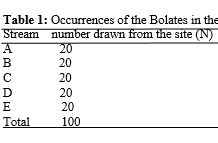
Salmonella enterica subspecies enterica serovar Typhi, commonly found in fruit salads, poses significant public health concerns due to its role in human infections and antibiotic resistance. Notably, approximately 80% of its resistance genes are plasmid-encoded, facilitating the spread of resistance and complicating treatment efforts. This cross-sectional study investigated the prevalence of enteric Salmonella species in ready-to-eat fruit salads sold in Uli community. A total of 100 samples were randomly collected from various hawkers and screened using standard microbiological techniques. The results revealed that 58.00% of the samples were positive for Salmonella serovar Typhi. Specifically, three strains were identified: Salmonella enterica subspecies enterica serovar Typhi strain CMCST (STCM), Salmonella enterica subspecies enterica serovar Typhi strain WG51146 (STWG), and Salmonella enterica subspecies enterica serovar Typhi strain R192829 (STR1). The occurrences of these strains were 31.03%, 24.14%, and 44.83%, respectively. Statistical analysis showed a significant presence of Salmonella serovar Typhi in the fruit salads. Notably, isolate STWG was the most predominant strain. The study's findings emphasize the importance of personal hygiene, community education, and proper fruit handling practices to control the transmission of Salmonella species. The high prevalence of Salmonella serovar Typhi in fruit salads poses a significant risk to public health, highlighting the need for effective interventions. This study's results can inform public health strategies to mitigate the risk of Salmonella infections in Uli community.
Downloads
Published
Issue
Section
License
Copyright (c) 2025 A. O. Ekesiobi, C. M. Iheukwumere, I. H. Iheukwumere, C. E. Ejike, C. C. Ilechukwu, V. E. Ike, C. C. Ikejiaku, F. O. Okereke, S. C. Ochibulu

This work is licensed under a Creative Commons Attribution 4.0 International License.