Stream Water Quality Assessment: Antibiotic Resistance of Lac-Positive Enteric Bacterial Isolates
DOI:
https://doi.org/10.54117/jpmesc.v4i2.21.2025Keywords:
Microbiological, Susceptible, Lactose-positive, StrainsAbstract
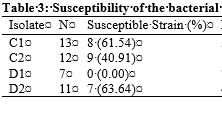
The increasing prevalence of antibiotic-resistant enteric bacterial species in stream water poses a significant threat to public health, potentially leading to waterborne outbreaks and complicating treatment options. This study aims to assess the antibiotic resistance patterns of enteric bacterial species isolated from stream water, informing strategies to mitigate the spread of antibiotic resistance and protect public health. A total of 100 stream water samples were collected, and screened for lactose-positive enteric bacterial isolates using standard microbiological techniques. The results revealed four bacterial species: Escherichia coli O157:H7, Escherichia coli JKHS016, Klebsiella pneumoniae 2014C06-125, and Klebsiella pneumoniae Kp2092. The antibiotic susceptibility testing showed that 42.76% of the isolates were resistant to conventional antibiotics, while 57.24% were susceptible. Notably, 34.48% of the resistant strains exhibited single antibiotic resistance, and 65.52% displayed multiple antibiotic resistance (MAR). Statistical analysis using the student "t" test, correlation coefficient and one-way analysis of variance (ANOVA) confirmed the significance (p ≤ 0.05) of these findings. This study highlights the significant prevalence of antibiotic-resistant Enteric bacterial species in stream water, with 42.76% of isolates resistant to conventional antibiotics and 65.52% displaying multiple antibiotic resistance. The findings emphasize the need for strategies to mitigate the spread of antibiotic resistance, protect public health, and ensure safe water sources to prevent waterborne outbreaks.
Downloads
Published
Issue
Section
License
Copyright (c) 2025 V. E. Ike, I. H. Iheukwumere, C. M. Iheukwumere, C. N. Dim, J. N. Ezendianefo, P. A. Egbe, I. P. Oragwu, C. C. Orji, O. C. Ogbonnaya, U. F. Onwuasoanya, F. O. Okereke, S. C. Ochibulu

This work is licensed under a Creative Commons Attribution 4.0 International License.