Amino Acid Profile and Functional Properties of Roasted Groundnut (Arachis hypogaea) and Cashew Nut (Anacardium occidentale) From Southeast Nigeria
DOI:
https://doi.org/10.54117/r5zf7z86Keywords:
Amino acid profile, Cashew nut, Functional properties, Food formulation, Groundnut, Protein-energy malnutritionAbstract
Background: Nuts are valued for their nutrient density, functional food properties, and potential in addressing protein-energy malnutrition. Groundnut (Arachis hypogaea) and cashew (Anacardium occidentale) are widely consumed in Nigeria but remain underutilized in food formulation research.
Objective: This study evaluated the amino acid profile and functional properties of roasted groundnut and cashew nut seeds to assess their nutritional potential and suitability for food applications.
Methods: Seeds were purchased from markets in Abia State, Nigeria, roasted using the traditional sand-roasting method, defatted, and analyzed for amino acid composition using an Applied Biosystems PTH Amino Acid Analyzer. Functional properties including bulk density, water and oil absorption capacity, solubility index, foaming properties, and emulsion capacity were determined using standard procedures.
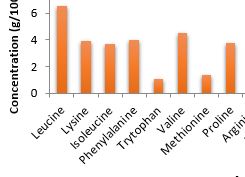
Results: Both seeds contained all essential amino acids, with glutamic acid being the most abundant (14.84 g/100 g protein in groundnut; 12.64 g/100 g in cashew). Groundnut showed higher water absorption capacity (1.35 g/g) and oil absorption capacity (2.44 g/g), while cashew exhibited greater foaming capacity (13.5%). Bulk density values were comparable (~0.55 g/ml), and both samples displayed low foam stability.
Conclusion: Roasted groundnuts and cashew nuts are rich in amino acids and exhibit desirable functional properties, supporting their use as affordable plant-based ingredients in complementary foods, baked goods, and meat substitutes. Their incorporation into food systems could help mitigate protein-energy malnutrition in resource-limited populations.
Downloads
Published
Issue
Section
License
Copyright (c) 2025 Perpetua. O Ndubuisi, Rosemary Obi – Joachim, Charity U. Obi, Olufemi G. Abimbola

This work is licensed under a Creative Commons Attribution 4.0 International License.