Standardized Protocol for the Phytochemical Characterization of Carica papaya as a Foundational Tool for Public Health Nutrition Research
DOI:
https://doi.org/10.54117/bcv7k291Keywords:
Standardized methodology, Phytochemical profiling, Public health nutrition, Carica papaya, Bioactive compounds, Food quality control, Nutritional biochemistryAbstract
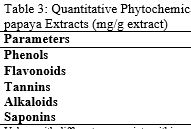
Background: The integration of traditional food plants like Carica papaya (paw paw) into public health nutrition is hindered by inconsistent phytochemical methods, leading to irreproducible data and stalled implementation. Objective: This study aimed to develop and validate a comprehensive, reproducible laboratory protocol for the extraction, fractionation, and quantitative phytochemical analysis of C. papaya leaves and seeds. Methods: A stepwise protocol was developed, encompassing: botanical authentication and optimal drying, sequential methanol extraction, bioactivity-guided fractionation for alkaloids and flavonoids, qualitative screening, and quantitative spectrophotometric assays for key phytochemical classes. The protocol was applied to leaf and seed samples with yield calculations and statistical validation. Results: Methanol extraction yielded 17.51% from leaves and 11.59% from seeds. Fractionation successfully isolated target compounds, with flavonoid yields (7.05–7.96%) exceeding alkaloid yields (2.65–2.97%). Quantitative analysis revealed a phytochemical profile dominated by saponins (1249.83 mg/g in leaves, 723.65 mg/g in seeds), followed by phenolic compounds and alkaloids. Conclusion: This standardized methodology provides an essential toolkit for generating consistent, chemically defined plant extracts. It ensures reproducibility and comparability, supporting the evidence-based development of C. papaya and similar plants as sustainable nutritional resources in public health initiatives addressing malnutrition and dietary deficiencies.
Downloads
Published
Issue
Section
License
Copyright (c) 2025 Hassan Abdulsalam Adewuyi, Timileyin Joshua Oluwadepo, Utitofon Ignatius Ntukuyoh, Ayodeji Ibraheem, AdeniyiOlusegun Oyeyemi, Busola Comfort Adedini, Bassey Jeremiah Usang

This work is licensed under a Creative Commons Attribution 4.0 International License.