Glycemic Response of Selected Fruits among Type 2 Diabetic Patients in Ibadan, Nigeria
DOI:
https://doi.org/10.54117/a5pzpj82Keywords:
Glycemic Response , Fruit Consumption, Type 2 DiabetesAbstract
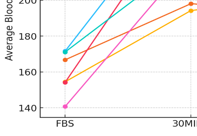
Type 2 diabetes mellitus (T2DM) requires careful dietary management to control postprandial blood glucose levels. This study assessed the glycemic response of selected fruits among individuals with T2DM in Ibadan, Nigeria. An experimental design was employed involving adult diabetic patients attending a tertiary hospital. Participants consumed five selected fruits (banana, pineapple, orange, watermelon, and pawpaw), each standardized to provide 50 g of available carbohydrate, as well as a reference glucose solution. Capillary blood glucose levels were measured at baseline and at 30, 60, 90, and 120 minutes post-consumption. Glycemic response indices, including peak postprandial blood glucose (PPBG), mean incremental blood glucose (MIBG), and 2-hour postprandial blood glucose (2hPBG), were calculated. Results showed that all fruits elicited increases in blood glucose levels, with peak responses occurring at 30 minutes. Pineapple and watermelon produced higher glycemic responses, with MIBG values of 90.30 ± 25.54 mg/dL and 102.43 ± 108.62 mg/dL, respectively, while pawpaw (31.28 ± 14.03 mg/dL) and banana (39.69 ± 34.76 mg/dL) showed lower responses. Similar patterns were observed across the study periods. In conclusion, selected fruits differ in their glycemic impact among individuals with T2DM. Fruits such as pawpaw and banana may be more suitable for glycemic control, while pineapple and watermelon should be consumed in moderation. These findings provide useful evidence for guiding dietary recommendations and improving glycemic management among diabetic patients.
Downloads
Published
Issue
Section
License
Copyright (c) 2026 Taibat M. Oduneye, Olusola Ladokun

This work is licensed under a Creative Commons Attribution 4.0 International License.