Antimicrobial Effects and Comparative Analysis of Xylopia aethiopica (Uda) and Monodora myristica (Ehuru) as Natural Preservatives for Abacha (African Salad)
DOI:
https://doi.org/10.54117/f9hhca15Keywords:
natural preservatives, Xylopia aethiopica, antimicrobial activity, food safety, AbachaAbstract
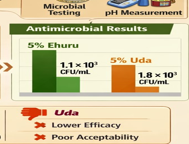
This study evaluated the antimicrobial efficacy of Xylopia aethiopica (Uda) and Monodora myristica (Ehuru) as natural preservatives for Abacha (African salad), a traditional Nigerian ready-to-eat food that is highly susceptible to microbial contamination. Abacha samples were obtained from two vendors, treated with different concentrations (2% and 5%) of Uda and Ehuru, and stored for 4 h at ambient temperature. Microbial analyses were conducted immediately upon arrival and after storage. The pH was evaluated, and microbial load was assessed using nutrient agar and selective media, including MacConkey agar, Mannitol Salt Agar, Eosin Methylene Blue agar, and Salmonella–Shigella agar, followed by biochemical tests for bacterial identification. Sensory evaluation was conducted using a 9-point hedonic scale. Five bacterial species were identified: Staphylococcus aureus, Escherichia coli, Salmonella spp., Pseudomonas aeruginosa, and Enterobacter spp. Ehuru exhibited the highest antimicrobial activity, with 5% Ehuru reducing microbial counts to near-baseline levels of 1.1 × 10³ and 1.2 × 10³ CFU/mL. Compared to untreated controls, which had 2.5 × 10³ and 3.3 × 10³ CFU/mL from vendors A and B, respectively. Uda also demonstrated inhibitory effects, but with lower efficacy and reduced sensory acceptability. Abacha with 2% Ehuru-treated samples recorded higher overall acceptability scores of 8, whereas Uda-treated samples were poorly rated, particularly in terms of taste and overall acceptability. These findings highlight the superior potential of Ehuru as a culturally relevant natural preservative for Abacha, combining effective microbial inhibition with high consumer acceptance. The adoption of indigenous spices in food preservation could reduce reliance on synthetic preservatives, thereby enhancing food safety and public health in Nigeria.
Downloads
Published
Issue
Section
License
Copyright (c) 2026 Chidinma A. Okafor, Ruth E. Ugwu, Favour E. Ogukah

This work is licensed under a Creative Commons Attribution 4.0 International License.