Banana Peel Bioconversion via Lactobacillus acidophilus: A Sustainable Approach to Short-Chain Fatty Acid Optimization in Rat Gut Physiology
DOI:
https://doi.org/10.54117/8v115x52Keywords:
Lactobacillus acidophilus, fermented banana peel, short-chain fatty acids, acetate, propionate, butyrate, gut health, ratsAbstract
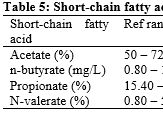
The gastrointestinal tract hosts a complex microbial ecosystem that produces short-chain fatty acids (SCFAs), which are critical signaling molecules and energy substrates that profoundly influence intestinal physiology, immune regulation, and systemic metabolic homeostasis. Banana peel, an abundant agricultural waste product, remains underutilized despite its rich content of fermentable fiber and bioactive compounds. Limited studies explore the impact of Lactobacillus-fermented banana peel on gut SCFA levels in rats, warranting investigation into its potential as a gut health modulator. This study was carried out to evaluate the effect of Lactobacillus-fermented banana peel on the modulation of short-chain fatty acid levels in the gut of rats and to investigate its potential as a gut health modulator. The fermenter used in this study was obtained following standard microbiological techniques. Banana peel was collected, processed, homogenized, and fermented using solid-state fermentation method, and this was incorporated as a feed additive and assessed for its impact on SCFAs of rat gut using in vivo techniques. The fermenter (Lactobacillus acidophilus strain DSM20079) was characterized culturally, morphologically, biochemically, and molecularly (100% 16S rRNA gene identity). Results showed that the fermented banana peel significantly modulated SCFA levels in the test group compared to the control. Acetate increased notably from 66.32% to 69.90%, remaining within the reference range of 50–72%. Propionate showed a substantial increase from 22.30% to 27.84%, staying within the normal range of 15.40–30.30%. N-valerate exhibited a slight increase from 3.01% to 3.09%, within the reference range of 0.80–5.00%. Notably, n-butyrate markedly decreased from 2.04 mg/L in the control group to 0.97 mg/L in the test group, moving from above the reference range (0.80–1.00 mg/L) into the normal range. All these effects were statistically significant (P < 0.05). The study concludes that Lactobacillus-fermented banana peel exhibited pronounced activity on the levels of short-chain fatty acids in the guts of rats. Hence, it could be used as an additive for healthy feed and as a potential strategy for modulating gut health through SCFA enhancement.
Downloads
Published
Issue
Section
License
Copyright (c) 2026 M. N. Okeke, I. E. Okoye, I. H. Iheukwumere, C. M. Iheukwumere, M. I. Nwachukwu, I. O. Nwachukwu, I. A. C. Mbachu

This work is licensed under a Creative Commons Attribution 4.0 International License.