Proximate and Elemental Analysis of Desert Date (Balanites aegyptiaca) Leaves: A Rich Medicinal Plant of Public Health Value
DOI:
https://doi.org/10.54117/1pw3gf26Keywords:
Balanites aegyptiaca, Proximate, Elemental analysis, Analysis, Desert Date, NutritionAbstract
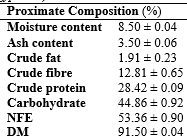
Balanites aegyptiaca, commonly known as Desert Date, is a valuable tree species found in arid and semi-arid regions, traditionally used for its nutritional and medicinal properties. This study evaluated the proximate and elemental composition of Desert Date leaves using AOAC methods. The desert date leaves were purchased at Jimeta modern market and the experiment was carried out at Science Laboratory Technology Laboratory. Proximate analysis revealed that the leaves contain low moisture content (8.50%) and high dry matter (91.50%), with substantial crude protein (28.42%), crude fiber (12.81%), and carbohydrate (44.86%) levels, but low crude fat (1.91%). Elemental analysis identified iron (5.224 mg/100g), calcium (5.714 mg/100g), and potassium (1.550 mg/100g), all below the recommended dietary allowances, along with trace amounts of zinc (0.290 mg/100g) and sodium (0.292 mg/100g). These findings suggest that Desert Date leaves could serve as a nutritional supplement, particularly for protein and fiber, though their mineral contribution is limited.
Downloads
Published
Issue
Section
License
Copyright (c) 2026 Fukadi Gambiye Sunday, Diana Adar Dabo, Nanre Naomi Musa, Mandau Lazarus Yusuf, Vongha Augusta Chiwendu, Solomon Panshak Dawal

This work is licensed under a Creative Commons Attribution 4.0 International License.