Production, Chemical, Antioxidant and Nutritional Properties of Potential Functional Foods from Yellow-Maize-Based Enriched with Animal Proteins for Rehabilitation of Malnourished Children
DOI:
https://doi.org/10.54117/ijnfs.v4i2.81Keywords:
Maize-based therapeutic foods, Nutrient Composition, Nutritional-quality, Antioxidant Activity, Malnourished ChildrenAbstract
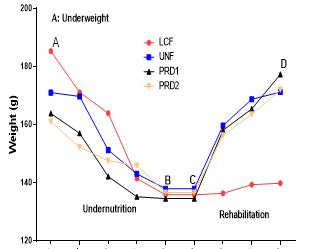
Ready-to-use therapeutic food (RUTF) has been implicated with aflatoxins contamination, high cost of production, and not well tolerated by lactose-intolerance children. Hence, this study was aimed to develop and evaluate nutritional quality of non-peanut-milk-based therapeutic foods for the management of acute malnutrition. The non-peanut-milk-based therapeutic-foods were formulated using FAO guidelines: PRD1 (30% egg, 50% yellow maize, 20% banana, 10% carrot, and 15% vegetable oil), and PRD2 (30% white crayfish, 50% yellow maize, 20% banana, 10% carrot, and 15% vegetable oil). RUTF (UNF: 30% full fat milk, 25% peanut, 15% soybean oil, 28% sugar, 2% mineral mix) and local complementary food (LCF: 100% yellow maize) served as controls. Nutritional, antioxidant, and organoleptic properties of the foods were determined by standard methods. Protein (20.07 - 24.73 g/100g), energy (460.36 - 491.27 kCal/100g), and minerals in PRD1 and PRD2 were significantly (p<0.05) higher than in LCF, but comparable to UNF. Minerals and phytate molar ratios, i.e., Ca/P, Na/K, Phytate/Ca, phytate/Zn, phytate/Fe and phytate*Ca/Zn were within the recommended values. Essential amino acids (mg/100g) in PRD1 (34.29) and PRD2 (40.47) were comparable to UNF (38.15). PRD1 exhibited highest antioxidant activity against ABTS, DPPH, FRAP, iron-chelation, and total phenol than other foods. Biological values (80.72 - 92.33%) of experimental foods were higher than FAO/WHO (70%) recommendation. For sensory attributes, PRD1 and PRD2 were rated lower than UNF. However, PRD1 exhibited highest nutrition-rehabilitation property in malnourished rats than other foods; therefore, it may be suitable as a replacement for peanut-milk-based therapeutic foods for malnourished-children.
Downloads
Published
Issue
Section
License
Copyright (c) 2025 Oluwole Steve Ijarotimi, Nnenna Daniel Madukwe, Remilekun Akinrinmade, Titilope Sadiat Olatunde

This work is licensed under a Creative Commons Attribution 4.0 International License.