Effect of Fig (Ficus capensis) and Ackee (Blighia sapida) Tea on Glucose Measurement and Antioxidant Potential in STZ-Induced Diabetic Rats
DOI:
https://doi.org/10.54117/ijnfs.v4i2.99Keywords:
Fig tea, Ackee tea, diabetes, antioxidants, blood glucose, oxidative stressAbstract
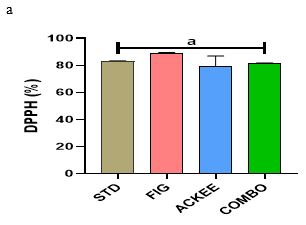
This study investigates the effects of Fig (Ficus capensis) and Ackee (Blighia sapida) tea on blood glucose levels and antioxidant activity in streptozotocin (STZ)-induced diabetic rats. Male Wistar rats were divided into ten groups: normal control, diabetic control, Fig tea-treated, Ackee tea-treated, Metformin-treated, Market sample-treated and combination-treated groups. Diabetes was induced using STZ (35 mg/kg, intraperitoneal). Tea infusions were administered orally for 16 days. Blood glucose levels were measured, and antioxidant activity was assessed using in vitro assays (DPPH, FRAP, F+, ABTS and OH content). In vivo antioxidant markers were evaluated, including catalase activity and glutathione levels. Fig and Ackee tea significantly reduced blood glucose levels (p<0.05) and enhanced antioxidant defenses, as evidenced by increased in vitro antioxidant activity and higher catalase and glutathione levels Fig and Ackee tea demonstrated glucose-lowering and antioxidant effects in diabetic rats, suggesting their potential in diabetes management.
Downloads
Published
Issue
Section
License
Copyright (c) 2025 Bukola Agnes Arowolo, Adebanjo Ayobamidele Badejo, Oluwole Steve Ijarotimi

This work is licensed under a Creative Commons Attribution 4.0 International License.