Impact of Lactobacillus Fermented Cassava Peel on Adiposity and Metabolic Parameters in Rats
DOI:
https://doi.org/10.54117/jafts.v3i1.136Keywords:
Fermenter, Lactobacillus, Cassava peel, Body-mass-index, RatsAbstract
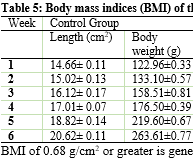
The increasing prevalence of obesity and related metabolic disorders necessitates exploration of novel, cost-effective interventions. Cassava peel, a waste product, is rich in nutrients but underutilized. While Lactobacillus fermentation enhances nutritional value, its impact on body mass indices remains unclear. Existing studies focus on nutritional enhancement, leaving a gap in understanding its effects on obesity management, creating a need to investigate the potential of Lactobacillus fermented cassava peel in modulating body mass indices in rats. This study investigated the effects of fermented and non-fermented cassava peel on body mass indices (BMI) of rats. The fermenter was isolated and characterized using standard microbiological techniques. Thirty rats were divided into control, fermented, and non-fermented groups. BMI was calculated weekly for six weeks. The fermenter used in the study was identified to be Lactobacillus acidophilus strain DSN20079 (LADSM). The results of the study showed significant increases in BMI in the non-fermented group (0.57 to 0.67 g/cm², p < 0.001) and fermented group (0.57 to 0.64 g/cm², p = 0.021) compared to the control group (0.57 to 0.62 g/cm²). The non-fermented group's BMI approached overweight/obese status (BMI ≥ 0.68 g/cm²). These findings suggest non-fermented cassava peel may promote more significant weight gain and BMI increase compared to fermented cassava peel. The study highlights the importance of processing methods on cassava peel's nutritional effects and recommend fermented cassava peel as growth enhancer and weight management in livestock.