
Fermented Corn Chaff as a Sustainable Feed Additive for Broiler Chick Production
DOI:
10.54117/ijamb.v6i1.132Published:
2026-02-17Issue:
Vol. 6 No. 1 (2026): Jan-MarKeywords:
Fermented corn chaff, Lactobacillus acidophilus, Broiler chicks, Growth performance, Feed additiveArticles
Downloads
How to Cite
Downloads
Abstract
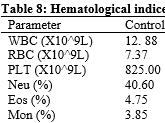
The increasing demand for poultry products necessitates sustainable feed additives. Corn chaff, an agricultural waste, is underutilized. While fermentation enhances nutritional value, its impact on broiler chick production remains unclear, leaving a gap in understanding its effects on growth performance and gut health, creating a need to investigate its potential as a sustainable feed additive.. This study evaluated the effect of fermented corn chaff as a chicken additive for healthy broiler chicks. The fermenter, identified as Lactobacillus acidophilus strain DSM20079 (LADSM), was characterized culturally, morphologically, and biochemically. The study showed significant increases (p<0.05) in body weights of test chicks from week 1 (186 g) to week 6 (1824 g) compared to controls (1442 g). Organ weights were similar between groups (p>0.05). Feed conversion ratio (FCR) was lower in test group from week 3-6 (p<0.05). Hematological indices revealed increased WBC (13.68 vs 12.88 x10^9L), RBC (7.89 vs 7.37 x10^12L), and lymphocytes (73.30% vs 50.70%) in test group (p<0.05). The study concludes that fermented corn chaff exhibits growth-promoting activity and can be used as an additive for healthy broiler chicks.
Author Biographies
O. Abba, Department of Microbiology, Federal University of Gusau, Zamfara State.
I. H. Iheukwumere, Department of Microbiology, Faculty of Natural Sciences, Chukwuemeka Odumegwu Ojukwu University, Uli, Campus, Anambra State, Nigeria.
C. M. Iheukwumere, Department of Applied Microbiology and Brewing, Faculty of Biosciences, Nnamdi Azikiwe University, Awka, Nigeria.
V. E. Ike, Department of Microbiology, University of Agriculture and Environmental Sciences, Umuagwo, Imo State, Nigeria.
J. N. Ezendianefo, Department of Microbiology, Tansian Universiy, Umunya, Anambra State, Nigeria.
D. J. Okongwu, Department of Chemistry, Nwafor Orizu College of Education, Nsugbe.
License
Copyright (c) 2026 O. Abba, I. H. Iheukwumere, C. M. Iheukwumere, V. E. Ike, J. N. Ezendianefo, D. J. Okongwu

This work is licensed under a Creative Commons Attribution 4.0 International License.
CC BY 4.0