
Solenostemon monostachyus Leaf Extract: A Potential Treatment for Vibrio cholerae from Uli Streams
DOI:
10.54117/ijamb.v6i1.134Published:
2026-02-17Issue:
Vol. 6 No. 1 (2026): Jan-MarKeywords:
Vibrio cholerae, Solenostemon monostachyus, alternative treatment, phytochemical constituents, Antibacterial activityArticles
Downloads
How to Cite
Downloads
Abstract
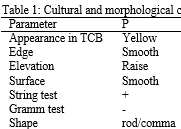
Vibrio cholerae is a significant pathogen responsible for cholera outbreaks worldwide. The rise of antibiotic-resistant strains has necessitated the search for alternative antibacterial agents. This study aimed to characterize V. cholerae isolates and evaluate the antibacterial activity of Solenostemon monostachyus leaves' extract against these isolates. V. cholerae isolates were characterized using cultural, morphological, and biochemical tests. Molecular identification was performed using 16S rRNA gene sequencing. The phytochemical constituents of S. monostachyus leaves' extract were analyzed, and its antibacterial activity was assessed using the disc diffusion method. Three V. cholerae isolates (VCC6, VCP2, and VCE7) were identified, exhibiting characteristic cultural, morphological, and biochemical features. The S. monostachyus leaves' extract contained alkaloids, flavonoids, and saponins. The ethanolic extract (EES) showed significant inhibition zones against the V. cholerae isolates (16.50-18.50 mm), comparable to ciprofloxacin (CPX). Statistical analysis revealed significant differences in inhibition zones (p < 0.05). The study suggests that S. monostachyus leaves' extract has potential antibacterial activity against V. cholerae isolates, with the ethanolic extract showing higher efficacy. This study provides valuable data on the antibacterial activity of S. monostachyus leaves' extract against V. cholerae isolates, highlighting its potential as an alternative treatment option.
Author Biographies
U. F. Onwuasoanya, Department of Medical Microbiology and Parasitology, Faculty of Basic Clinical Sciences, Nnamdi Azikiwe University, Nnewi Campus, Nigeria.
I. H. Iheukwumere, Department of Microbiology, Faculty of Natural Sciences, Chukwuemeka Odumegwu Ojukwu University, Uli, Campus, Anambra State, Nigeria.
C. M. Iheukwumere, Department of Applied Microbiology and Brewing, Faculty of Biosciences, Nnamdi Azikiwe University, Awka, Nigeria.
B. C. Unaeze, Department of Medical Microbiology and Parasitology, Faculty of Basic Clinical Sciences, Nnamdi Azikiwe University, Nnewi Campus, Nigeria.
D. J. Okongwu, Department of Chemistry, Nwafor Orizu College of Education, Nsugbe.
O. Abba, Department of Microbiology, Federal University of Gusau, Zamfara State.
V. E. Ike, Department of Microbiology, University of Agriculture and Environmental Sciences, Umuagwo, Imo State, Nigeria.
License
Copyright (c) 2026 U. F. Onwuasoanya, I. H. Iheukwumere, C. M. Iheukwumere, B. C. Unaeze, D. J. Okongwu, O. Abba, V. E. Ike

This work is licensed under a Creative Commons Attribution 4.0 International License.
CC BY 4.0