
Examination of Antimicrobial Resistance Genes among Multidrug Resistant Klebsiella pneumoniae and Escherichia coli Isolated from Local Herbal Drugs in Anambra, Nigeria
DOI:
10.54117/ijamb.v6i1.147Published:
2026-03-18Issue:
Vol. 6 No. 1 (2026): Jan-MarKeywords:
Klebsiella pneumoniae, Escherichia coli, Antibiotic resistance, Local herbal drugsArticles
Downloads
How to Cite
Downloads
Abstract
Background: Herbal medicines are derived from the plants or plant extracts containing therapeutic substances. There has been an overwhelming increase in the production and distribution of herbal medications, and the trend has instigated concern about the quality of these products, leading to various reports on the contamination of these herbal medicines by pathogenic microorganisms.
Objective: Hence, the aim of this research is to determine the antibiogram and antibiotic resistance genes of Klebsiella sp isolated from local herbal drugs in Awka metropolis.
Methodology: Different samples of herbal remedies used for this study were randomly obtained from different markets in Anambra metropolis in order to identify Escherichia coli and Klebsiella pneumoniae. Identification of the bacterial isolates was accomplished by the observation of colonial characteristics, Gram reaction and biochemical tests results. The molecular characterization and antibiotic characterization of Klebsiella pneumonia and Escherichia coli was determined using standard molecular techniques: DNA extraction and PCR identification techniques.
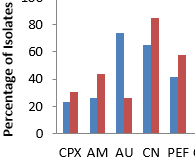
Results: The isolates showed general antimicrobial resistance to most of the antibiotics, with higher percentage of the Klebsiella pneumonia isolates exhibiting higher antimicrobial resistance than the Escherichia coli isolates. The SHV and RPO S genes were found in Escherichia coli, while the antibiotic resistant genes: SHV, RPO S AND RPO E were found in Klebsiella pneumonia. However, the NDM, KPC, TEM, CTX M, AAC and OXA genes were not detected in any of these organisms.
Conclusion: This study confirms that herbal medicines are reservoirs for resistant enteric bacteria which possess genes for antibiotic resistance with significant public health implications.
Author Biographies
Nwanneka C. Nwozor, Department of Applied Microbiology and Brewing, Nnamdi Azikiwe University, Awka Anambra State, Nigeria.
Sebastine O. Nwoko, Department of Human Biochemistry, Nnamdi Azikiwe University Awka.
Ndubuisi S. Onuoha, Department of Microbiology, Alex Ekwueme Federal Univeristy, Ebonyi State.
Hilary Chibuikem Ojiaku, Department of Applied Microbiology and Brewing, Nnamdi Azikiwe University, Awka Anambra State, Nigeria.
Chinedu Kingsley Onuoha, Department of Applied Microbiology and Brewing, Nnamdi Azikiwe University, Awka Anambra State, Nigeria.
License
Copyright (c) 2026 Nwanneka C. Nwozor, Sebastine O. Nwoko, Ndubuisi S. Onuoha, Hilary Chibuikem Ojiaku, Chinedu Kingsley Onuoha

This work is licensed under a Creative Commons Attribution 4.0 International License.
CC BY 4.0