
Exploring the Phytochemical and Antimicrobial Properties of Fruit Vinegar: A Study on Phoenix Dactylifera and Malus Sylvestris
DOI:
10.54117/ijamb.v4i1.48Published:
2025-05-15Issue:
Vol. 4 No. 1 (2025): Jan-JunKeywords:
Vinegar, Phytochemical, Antimicrobial, Saccharomyces, Acetobacter, Staphylococcus, Escherichia, CandidaArticles
Downloads
How to Cite
Downloads
Abstract
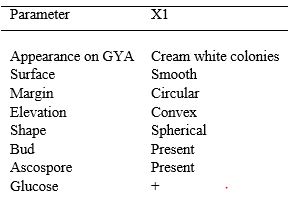
The increasing prevalence of antimicrobial resistance have sparked interest in exploring for natural remedies. Vinegar is traditionally consumed for its potential health benefits, but the phytochemical composition and antimicrobial efficacy of vinegar produced from Phoenix dactylifera (date) and Malus sylvestris (apple) fruits require further investigation. This study investigated the phytochemical composition of Phoenix dactylifera (PD) and Malus sylvestris (MS) fruit vinegars, exploring their potential as natural antimicrobial agents. Yeast and acetic acid bacterium were isolated from spoilt fruits and characterized using appropriate microbiological techniques. Vinegar production was carried out using submerged fermentation of must extracted from Phoenix dactylifera (PD) and Malus sylvestris (MS) fruits. The physicochemical properties, nutrient and phytochemical constituents were determined using gravimetric and instrumentation techniques. In vitro and in vivo techniques were employed for the antimicrobial potency. The data generated from this study were analyzed at 95% confidence level using Analysis of Variance (ANOVA), and post-hoc analysis using Turkey’s test. Alkaloids, saponins, flavonoids, tannins and glycosides were detected in the vinegar produced from MS and PD using Saccharomyces cerevisiae strain SR 128 (CS 128) and Acetobacter aceti strain WI (AAWI). There were significant (P < 0.05) inhibition of the vinegar samples against Staphylococcus aureus, Escherichia coli, Salmonella enterica serovar Typhi and Candida albicans, and the activity was most against E. coli. Therefore, the prepared vinegar samples from MS and PD possessed significant phytochemical and antimicrobial properties, and the sample produccd from PD was slightly better than the sample produced from MS.
Author Biographies
I. H. Iheukwumere, Department of Microbiology, Faculty of Natural Sciences, Chukwuemeka Odumegwu Ojukwu University, Anambra State, Nigeria.
J. C. Ajeh, Department of Microbiology, Faculty of Natural Sciences, Chukwuemeka Odumegwu Ojukwu University, Anambra State, Nigeria.
C. M. Iheukwumere, Department of Applied Microbiology & Brewing, Faculty of Biosciences, Nnamdi Azikiwe University Awka, Nigeria.
V. E. Ike, Department of Biology, University of Agriculture and Environmental Sciences Umuagwo, Imo State.
A. O. Obianom, Department of Applied Microbiology & Brewing, Faculty of Biosciences, Nnamdi Azikiwe University Awka, Nigeria.
U. A. Ihenatuoha, Department of Environmental Health, Technology, Federal College of Animal Health and Production Technology, NVRI, VOM, Plateau State.
E. U. Igboanugo, Department of Microbiology, Faculty of Applied and Natural Sciences, Legacy University, Okija, Anambra State, Nigeria
U. F. Onwuasoanya, Department of Medical Microbiology and Public Health, Faculty of Medical Laboratory Science, NAU
F. O. Okereke, Department of Biological Sciences (Microbiology), Spiritan University, Nneochi, Abia State
C. H. Nnadozie, Department of Microbiology, Faculty of Natural Sciences, Chukwuemeka Odumegwu Ojukwu University, Anambra State, Nigeria.
C. F. Agbaugo, Department of Microbiology, Faculty of Natural Sciences, Chukwuemeka Odumegwu Ojukwu University, Anambra State, Nigeria.
M. I. Nwike, Department of Microbiology, Faculty of Natural Sciences, Chukwuemeka Odumegwu Ojukwu University, Anambra State, Nigeria.
N. E. Nwakoby, Department of Microbiology, Faculty of Natural Sciences, Chukwuemeka Odumegwu Ojukwu University, Anambra State, Nigeria.
C. C. Ilechukwu, Department of Biochemistry, Faculty of Natural Science,Chukwuemeka Odumegwu Ojukwu University, Anambra State, Nigeria.
License
Copyright (c) 2025 I. H. Iheukwumere, J. C. Ajeh, C. M. Iheukwumere, V. E. Ike, A. O. Obianom, U. A. Ihenatuoha, E. U. Igboanugo, U. F. Onwuasoanya, F. O. Okereke, C. H. Nnadozie, C. F. Agbaugo, M. I. Nwike, N. E. Nwakoby, C. C. Ilechukwu

This work is licensed under a Creative Commons Attribution 4.0 International License.
CC BY 4.0